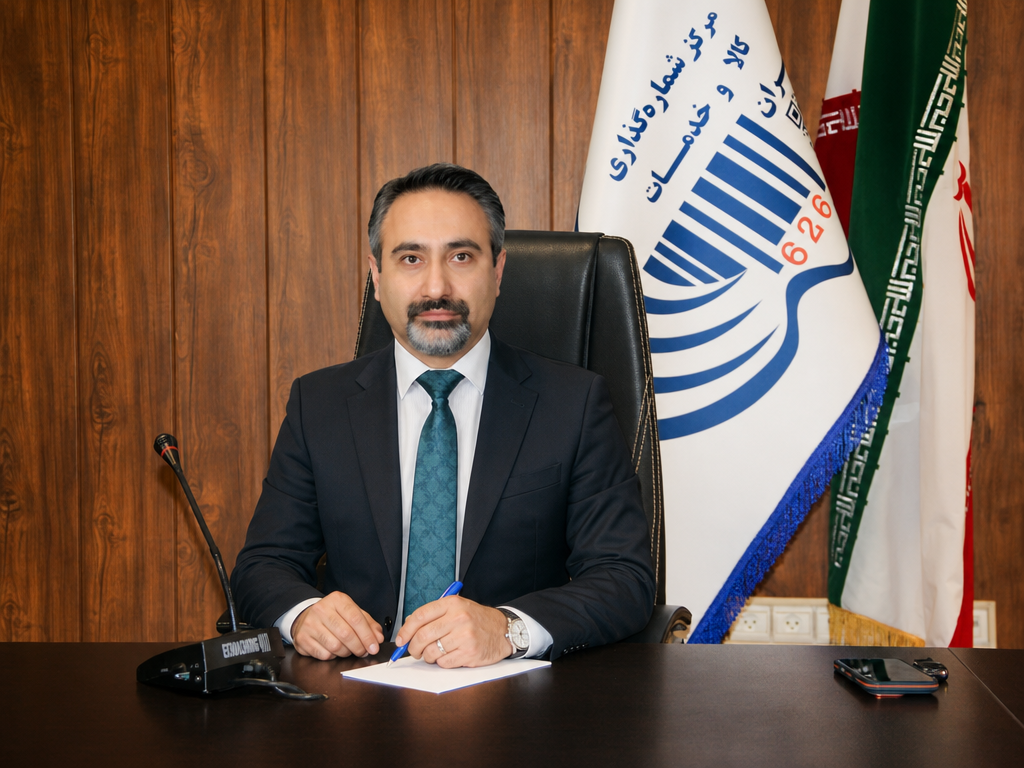
At the 30th National Export Day ceremony, held at the Summit Hall in the presence of President Masoud Pezeshkian, Saeed Tajik—chairman of the Tehran Chamber of Commerce’s Energy and Environment Committee and board chairman of Iran Quality and Standard Inspection Company—used his podium as one of the country’s selected exporters for the year 1405 to press the 14th government for decisive action on export facilitation.
Tajik described the past year as one of the hardest Iran has faced in five decades, praising the resilience of Iranians and the armed forces during crisis and war. He argued that the country’s resistance has won greater international respect and created an exceptional opportunity for Iran to return to the global economic cycle—but only if the current “neither war nor peace” situation ends.
He warned that without reintegration into world markets, the budget deficit, inflation, exchange-rate instability, and trade imbalance will persist. He identified three main obstacles: sanctions and restricted access to international trade systems; domestic regulations that act as “domestic sanctions”; and weak competitiveness and compliance with target-market requirements.
Tajik criticized caps on commercial cards, currency contracting, government intervention in pricing and exchanging export proceeds, and ambiguous enforcement of the Law on Combating the Smuggling of Goods and Currency, which he said can wrongly label economic actors as violators. He also noted that Iranian standard and conformity certificates are still not widely accepted abroad, creating non-tariff barriers despite preferential trade agreements.
He proposed six demands: suspending the anti-smuggling law in wartime conditions; ending government pricing and exchange of export proceeds; setting commodity priorities for foreign-currency allocation; removing currency contracting; simplifying order-registration bureaucracy for importers; and strengthening export management companies. He also called for recognizing technical and engineering services, including testing, inspection, and certification firms, as service producers in ISIC codes and for removing non-tariff barriers through bilateral agreements and acceptance of Iranian certificates.