
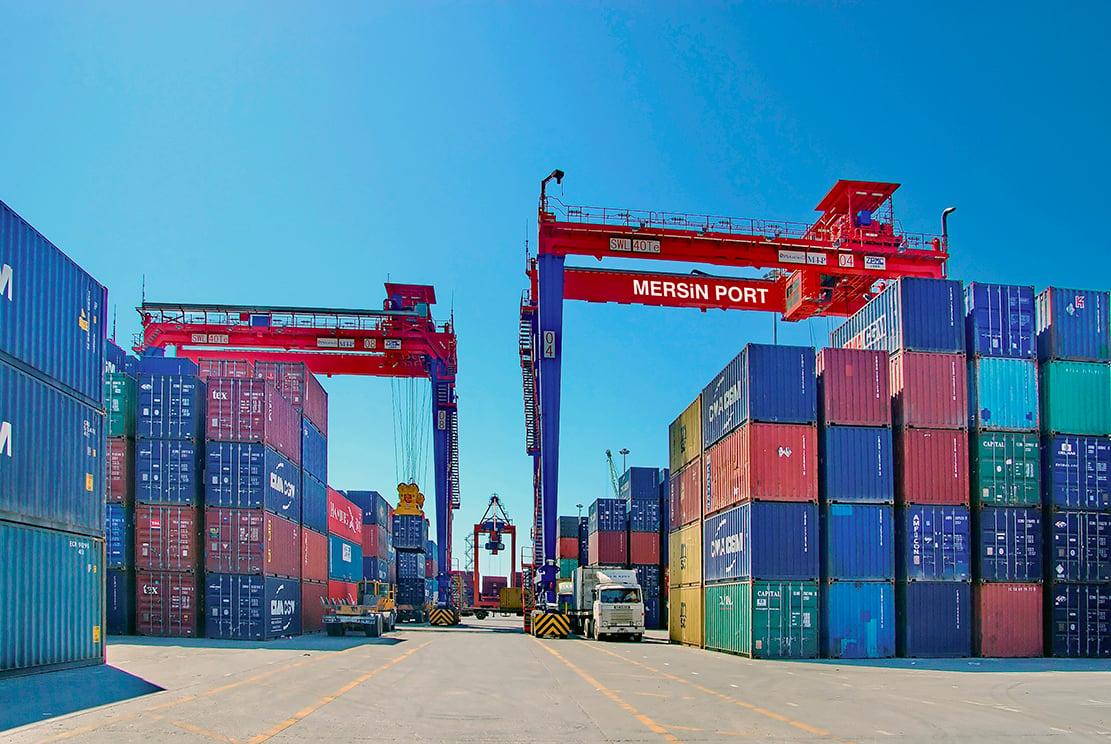
Iran and Turkey have set an ambitious target: $30 billion in bilateral trade. But reaching it will require more than rising exports and imports. The two neighbors are betting on border upgrades, faster truck clearance, new crossings, rail and road links, Turkish ports, and a proposed Khoy–Van–Mersin free zone.
The scale of the challenge is clear. Trade stood at about 6.8 billion in Iranian exports and $12.4 billion in imports. In the first five months of 1405, Iran exported $3.7 billion to Turkey and imported $2.8 billion. Closing the gap means adding roughly $10.8 billion, a task impossible without removing logistics bottlenecks.
Bazargan remains the key overland gateway, not only for bilateral trade but also for transit among Turkey, Europe, Iran, and Central Asia. Iran Customs says daily truck crossings exceeded 350 in Mordad, with a target of 400. From the start of the year to Mordad, about 190,000 tons were exported via Bazargan—up 40 percent—while 150,000 tons of imports, including staples, medicine, and bananas, were cleared, up 250 percent. A joint meeting in August focused on e-TIR, wider TIR use, and cutting waiting times, which directly affect costs and reliability.
Capacity alone is not enough. Iran and Turkey are also moving toward a fourth border crossing near Salmas in the Kuzeh Rash area. More crossings would ease pressure and prevent new truck queues if trade expands. The proposed Khoy–Van–Mersin free zone goes further: it would link Khoy and the Razi border to Van and Turkey’s transport network, then to Mersin, creating a wider logistics and production chain. Iran says government approval has been obtained; Turkey’s coordination is the next step.
Turkish ports—Mersin, Samsun, Trabzon, and Izmir—are central to the plan. Rather than treating Turkey only as a consumer market, Iran wants to use it as a gateway to Europe, Africa, and the Mediterranean. Dariush Vossoughi, Iran’s commercial attaché in Istanbul, has stressed exactly this broader role. Mersin, in particular, could serve as a maritime hinterland connected to the overland route. Geopolitical disruptions have made combined road-rail-sea routes more valuable.
Yet obstacles remain: anti-dumping measures, quotas, higher tariffs, and transit problems. The private sector is already active—7,288 companies with Iranian capital operate in Turkey. For Iran, the $30 billion question is not simply how much is traded, but at what cost, speed, and through which routes goods can reach Turkey and beyond.