
Iran and Azerbaijan are turning shared borders and transport corridors into a stronger economic partnership, with officials reporting a rise in bilateral trade over the past six months despite regional instability.
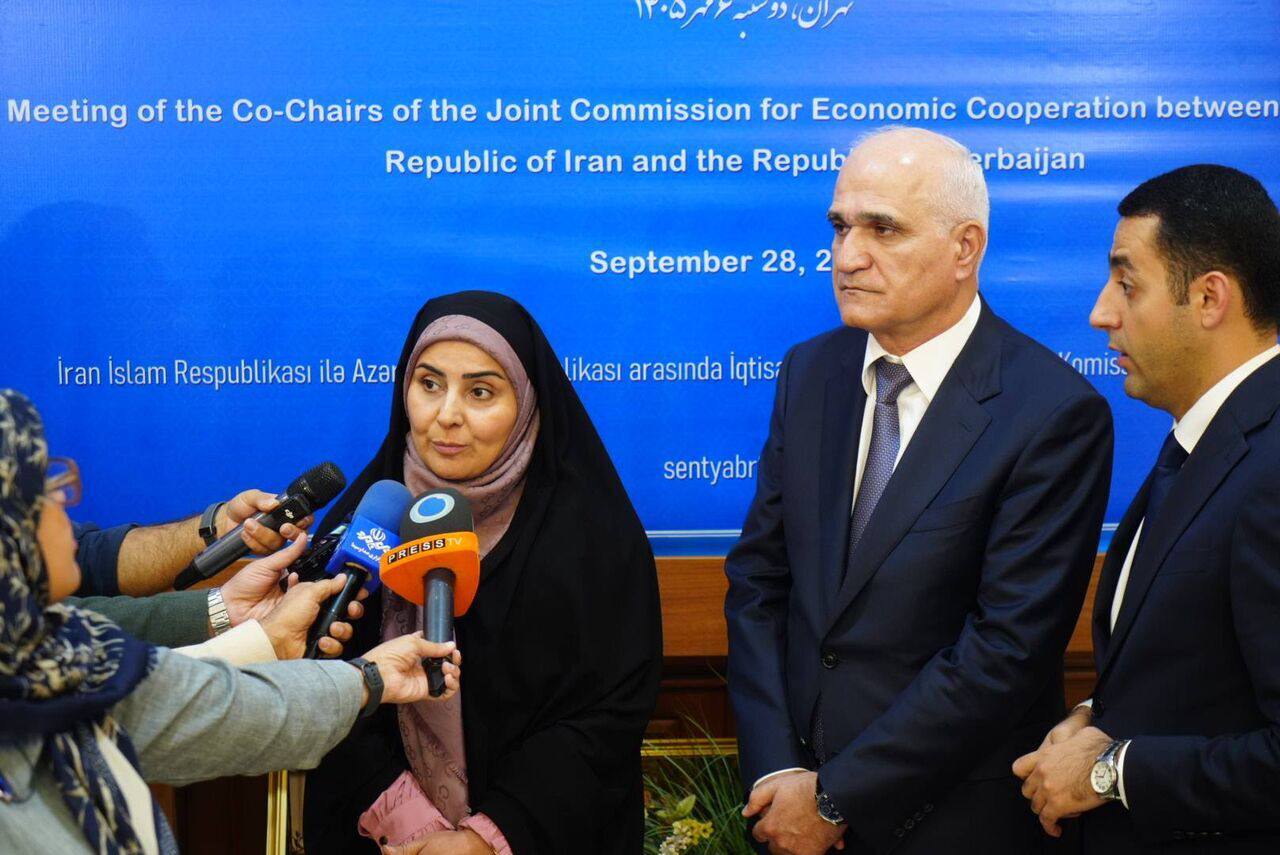
At a meeting of the two countries’ Joint Economic Cooperation Committee in Tehran, Iran’s Minister of Transport and Urban Development, Farzaneh Sadegh, hosted Azerbaijani Deputy Prime Minister Shahin Mustafayev. Sadegh described relations as friendly, brotherly and strategic, saying the session reviewed agreed projects and the implementation of past deals.
Trade, she noted, has grown even amid the problems caused by war in the region. Infrastructure development and the removal of obstacles, she argued, are essential to sustaining that momentum. The widening of the Jolfa–Kalaleh route, she said, could significantly increase transport capacity and the volume of exchanges between the two neighbors.
Mustafayev struck a similarly optimistic tone. He said trade volume has increased and cargo movement along the International North-South Transport Corridor is on an upward trend. Talks covered trade, logistics, transportation and energy, with both sides examining priority areas and future cooperation. The corridor, linking India, Iran, Azerbaijan and Russia, has become increasingly important as alternative supply routes gain value.
Key joint infrastructure projects are nearing completion. These include a bridge over the Aras River, the Aghband–Kalaleh project and the Astara railway freight terminal. Mustafayev said he discussed their inauguration with his Iranian counterpart and hoped they would open as soon as possible. He stressed that developing cooperation with Iran remains one of Azerbaijan’s priorities.
Sadegh concluded that friendly and brotherly ties have prepared the ground for broader cooperation in various fields, and that bilateral relations are expected to expand further. For Tehran and Baku, the message is pragmatic: better connectivity, fewer barriers and faster projects can turn geographic proximity into lasting economic gain. The months ahead will test that promise.