
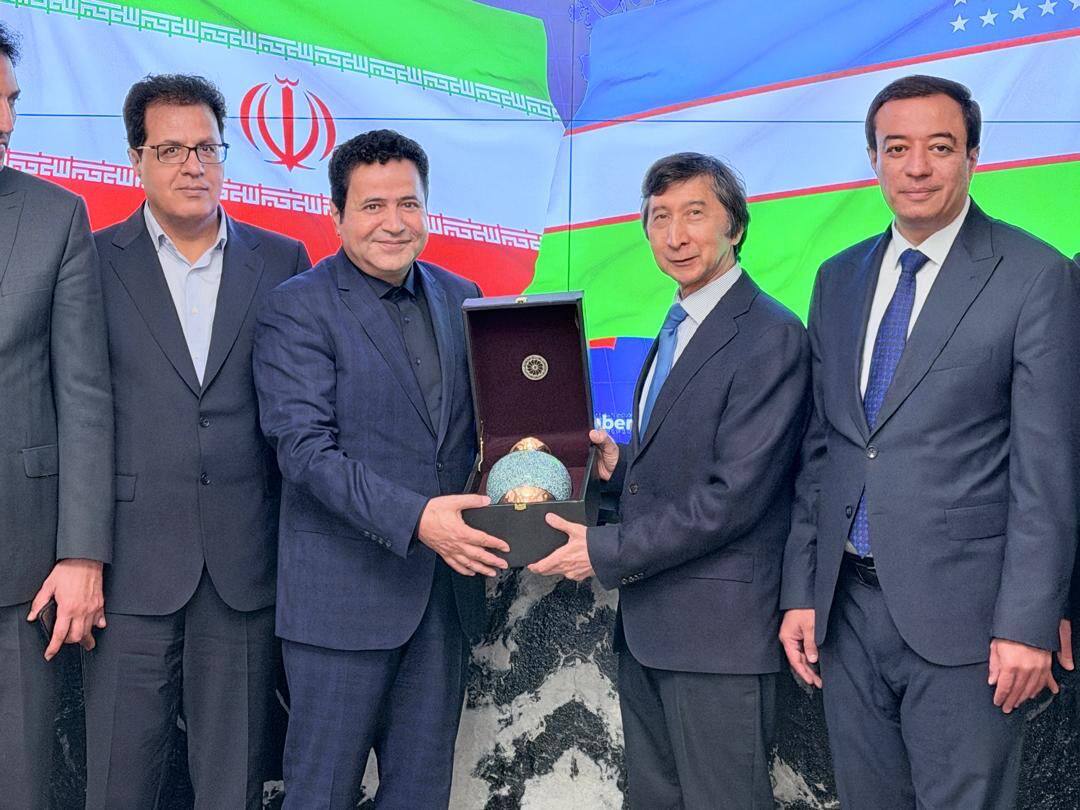
A high-level Iranian trade delegation, led by the Minister of Agriculture and including the Vice President of the Iran Chamber of Commerce, has concluded a series of productive meetings in Tashkent aimed at revitalizing economic cooperation between Iran and Uzbekistan. The visit underscored a shared commitment to moving beyond signed agreements toward tangible, on-the-ground results.
At the heart of the discussions was the implementation of the memorandum of understanding between the two chambers. Hossein Pir-Moazen, Vice President of the Iran Chamber, stressed that the private sectors of both nations are ready to overcome obstacles. "The strength of Iran’s private sector is that it implements whatever seems impossible," he stated, pointing to agriculture and food processing as key sectors where Iranian resilience has yielded results. He emphasized that the Iran-Uzbekistan Joint Chamber would play a crucial role in facilitating company registrations and fostering direct business-to-business links.
Uzbekistan’s Deputy Chairman of the Chamber of Commerce and Industry, Alisher Sheikhov, welcomed Iranian companies, particularly in the poultry sector where cooperation is already advancing. He called for a strategic approach to investment, suggesting that the location of new companies within Uzbekistan should be carefully matched with export goals and regional transport links to ensure easy access to target markets. He also proposed a mutual exchange of regional economic data to enhance familiarity between business communities.
In parallel diplomatic talks, Iran’s Minister of Agriculture, Gholamreza Nouri Ghezeljeh, met with the Chairman of Uzbekistan’s Food Security Committee, signaling a new era of agricultural collaboration. The minister praised the committee's formation and highlighted Iran's hard-won expertise in maintaining food security under sanctions, achieving an 85% self-sufficiency rate. "Iran is ready to share its experiences in food security, production, and technology transfer," he said, positioning Iran as a knowledge partner for Uzbekistan and the broader Muslim world.
The agricultural dimension of the visit yielded several concrete proposals. The Iranian side suggested forming a joint working group to tackle livestock and plant quarantine issues, which would streamline trade. Furthermore, Minister Nouri Ghezeljeh proposed a strategic joint investment in a dedicated port terminal at Chabahar or Bandar Abbas. This infrastructure, he argued, would provide landlocked Uzbekistan with vital access to the Persian Gulf via the North-South Corridor, transforming regional connectivity.
Addressing Iranian traders at the embassy, the minister stressed that agricultural trade must evolve beyond simple import-export. "We must create more added value through technology transfer, joint production, and licensed manufacturing," he stated, announcing that several cooperation contracts were ready for signing. He also noted a 36% increase in importers of essential goods as a sign of growing transparency and competition in Iran’s market.
Both sides acknowledged that despite recent progress, trade volumes remain below their true potential. The meetings concluded with an invitation for the Uzbek committee chairman to visit Tehran, where final documents and remaining technical standards, including quarantine and veterinary protocols, will be finalized. The overarching sentiment was clear: by linking Uzbekistan's regional centrality with Iran's corridor capabilities, the two nations aim to build a resilient and expanded economic partnership that extends beyond their bilateral ties to the wider CIS region.