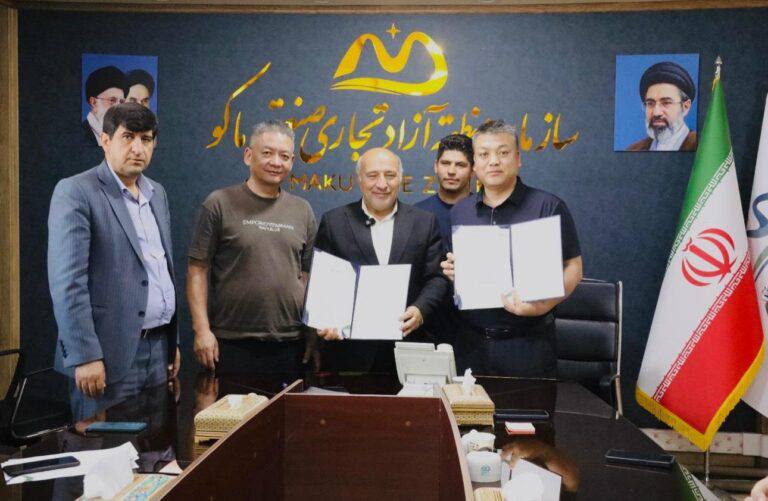
Iran's Maku Free Zone Organization has inked a broad memorandum of understanding with an undisclosed Chinese partner, paving the way for joint investments across rail transport, energy generation, mining, and electric vehicle assembly. The agreement outlines technical cooperation, project financing, and infrastructure development in the northwestern free zone, which sits strategically along the Turkish and Azerbaijani borders.
The deal's centerpiece is the proposed East-West rail corridor—specifically the Tabriz–Cheshmeh-Soraya line—designed to link Iran's domestic network with Turkey and onward to European markets. Should it materialize, the route would integrate with the International North-South Transport Corridor (INSTC), offering a competitive overland alternative to maritime shipping between Asia and Europe. Additional provisions cover solar-thermal hybrid power plants, dry port logistics, and the local assembly of hybrid and electric vehicles—a sector where Chinese manufacturers hold significant cost advantages.
For China, the partnership fits squarely within its Belt and Road framework, providing a land-bridge into West Asia. For Iran, the deal promises foreign capital and technology transfer at a time when sanctions have constrained access to Western financing. However, investors remain cautious. Geopolitical risks—including US secondary sanctions, regional instability, and the project's heavy upfront capital requirements—could delay or dilute execution. The MoU itself is non-binding, and financing models have yet to be finalized. Still, if successfully implemented, the Maku zone could evolve into a logistics and industrial hub, boosting non-oil trade and offering Chinese firms a foothold in a market of 85 million consumers. The 25-year Iran-China strategic partnership provides the broader political cover, but market watchers await concrete financial commitments before pricing in real economic impact.