
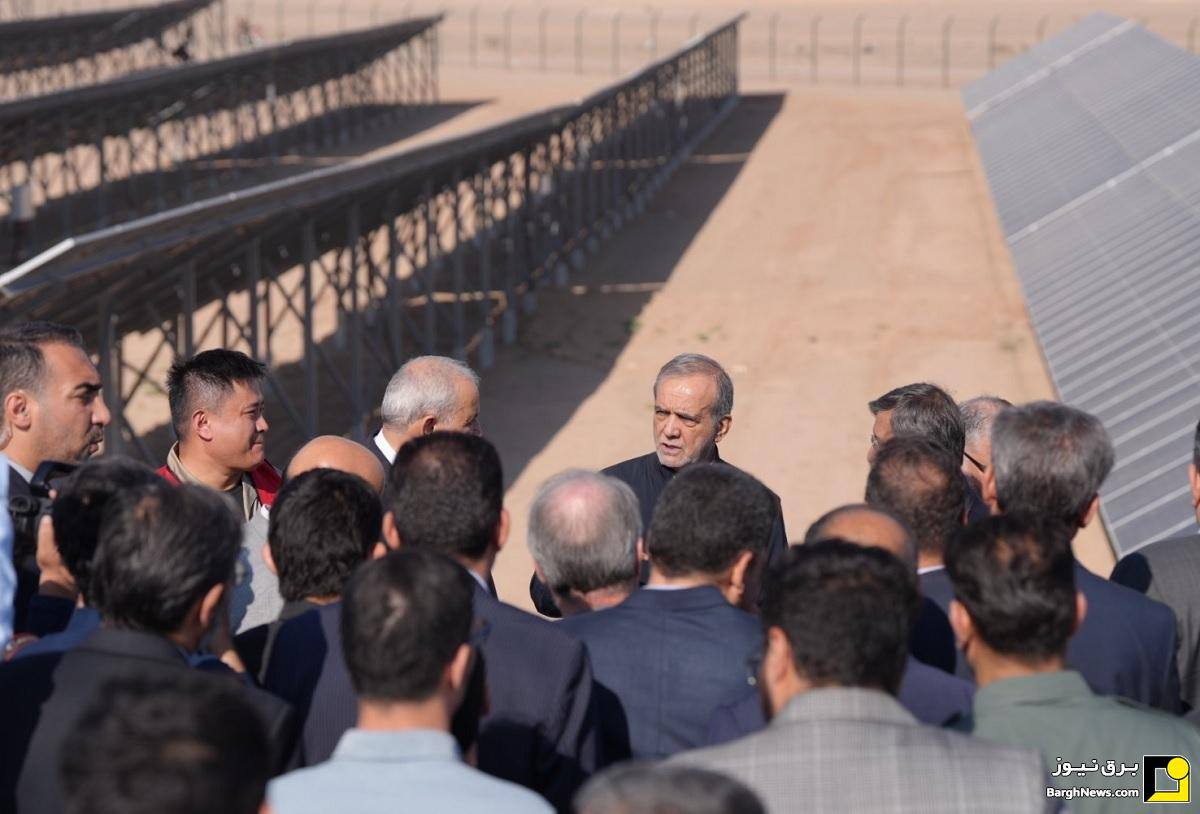
In a significant step toward diversifying its energy mix, Iran inaugurated its largest solar power plant on Tuesday, marking a milestone in the country's push for cleaner electricity generation. The 95-megawatt facility, located adjacent to Shamsabad Industrial City—the nation's largest industrial zone southeast of Tehran—was officially opened by President Masoud Pezeshkian, alongside Energy Minister Abbas Aliabadi and Central Bank Governor Abdolnaser Hemmati.
Built in under nine months on a 147-hectare site, the plant comprises two sections of 63 MW and 32 MW and is designed to supply a portion of the industrial city's daytime peak consumption. With this addition, Iran's total solar generation capacity now approaches 5,500 megawatts—a modest but growing figure as the country seeks to reduce its heavy reliance on fossil fuels.
Speaking at the inauguration, President Pezeshkian underscored the urgency of stable power supply for industry, stating that renewable energy development must eventually eliminate industrial outages. He expressed confidence in the country's ability to break new records using existing resources.
Central Bank Governor Hemmati announced the bank's full commitment to financing the green transition, revealing that $1.7 billion has already been allocated to renewable projects. He emphasized the need for expanded investment in solar panel manufacturing, pledging both foreign currency and rial support for the sector.
Energy Minister Aliabadi highlighted the ministry's broader vision, including household-scale power plants and passive defense considerations. He noted that financing mechanisms have been streamlined through project funds, and affirmed that Iran's water and electricity industries have achieved self-sufficiency, independent of global supply chains.
The inauguration comes during Government Week and signals growing political and financial will to advance renewable energy—a sector long overshadowed by Iran's vast oil and gas reserves but now increasingly seen as vital for industrial resilience and long-term sustainability.