
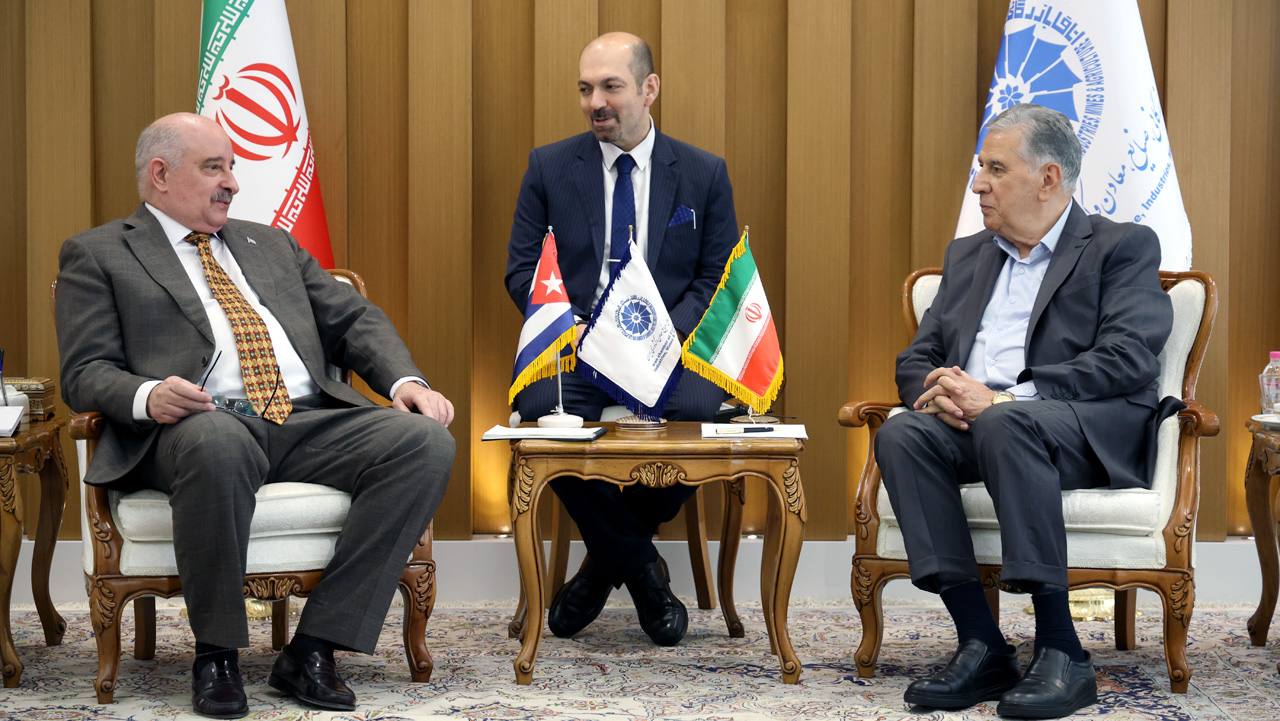
In a series of high-level diplomatic and business exchanges, Iran and Cuba have signaled a renewed determination to transform their long-standing political solidarity into tangible economic partnership. With both countries enduring decades of U.S.-led sanctions, recent meetings in Tehran and Havana have outlined a roadmap for cooperation across sectors ranging from sugar and cement to mining, pharmaceuticals, and renewable energy.
The push for deeper ties comes at a pivotal moment. Cuba, facing intensified sanctions and acute fuel shortages, has embarked on a sweeping economic reform program that opens significant space for private-sector participation and foreign investment. Iran, with four decades of experience navigating sanctions, sees an opportunity to deploy its industrial and technical expertise in a market that shares its geopolitical challenges.
Tehran Dialogue: Removing Logistical Hurdles
The groundwork for this economic rapprochement was laid during a meeting in Tehran between Samad Hassanzadeh, head of the Iran Chamber of Commerce, Industries, Mines and Agriculture (ICCIMA), and Jorge F. Lefebre Nicolás, Cuba's ambassador to Iran, on August 23.
Hassanzadeh made it clear that Iranian investors are ready to enter the Cuban market, but two critical obstacles must first be resolved: transportation and monetary transfers. "If logistical and monetary transfer issues are resolved, Iranian investors will enter the Cuban market," he stated, identifying offshore farming, sugar production, automotive parts, and sanitary products as promising areas for joint cooperation.
The Cuban ambassador responded by detailing the island's ongoing economic transformation. Facing tightened U.S. sanctions and a severe oil supply crisis, Havana has decided to fundamentally reshape its economic model. New laws now permit private banks, exchange houses, and expanded foreign participation in sectors once dominated by the state. Fuel supply and distribution, for instance, have been handed over to the private sector.
Ambassador Nicolás invited Iranian companies to consider opportunities in hospitality—where Spanish firms once held sway—as well as agriculture, where Vietnam has already pioneered land-lease arrangements. He also highlighted mining, particularly nickel and quartz, car rental services, and renewable energy as sectors ripe for Iranian investment.
Legal Reforms Open New Doors
A recurring theme in both capitals was the need for Cuban legal reforms to be clearly documented and communicated to Iranian businesses. Hassanzadeh urged Cuban authorities to provide written guidelines on new investment laws, noting that Iranian companies, having survived sanctions for forty years, are uniquely equipped to operate under constrained conditions.
The ambassador acknowledged that transportation remains the primary operational hurdle but expressed confidence that solutions exist, including alternative shipping routes and non-dollar payment mechanisms. He proposed practical next steps: online business-to-business meetings through the embassy, a delegation of Iranian companies to visit Cuba, and a reciprocal Cuban business mission to Iran.
Official invitations have already been extended to Cuba's economy minister, industry minister, and chamber of commerce president to visit Iran, a move that could accelerate deal-making and mutual understanding.
Havana Delegation: From Talk to Action
The diplomatic dialogue quickly moved into operational territory. In late November 2025, an Iranian business delegation led by Hassanzadeh traveled to Havana to explore specific investment projects aimed at reviving Cuba's stalled industrial capacity.
During meetings with Cuban officials, Hassanzadeh requested a comprehensive list of dormant factories, particularly in sugar and cement production. Iran, he argued, could play a vital role in restoring Cuba's once-prominent sugar industry by supplying machinery and agricultural technology.
Cement was another priority, with Iranian investors ready to build several plants provided clear regulatory conditions and investment guarantees are established.
ICCIMA Deputy Head Ghadir Ghiyafeh described mining as a cornerstone for long-term cooperation. Cuba remains an underdeveloped but resource-rich market, and Iranian firms possess advanced expertise in mineral exploration, extraction, and processing. He specifically mentioned cobalt and nickel production and noted that Iranian engineering companies are prepared to train Cuban specialists for a planned national steel plant. Khuzestan Steel Company has already expressed readiness to collaborate.
Ghiyafeh projected that a clear legal framework could help push bilateral trade volumes to one billion dollars within five years. Construction, roadbuilding, food industries, agriculture, and mining were identified as preferred sectors for Iranian investors.
Presidential Endorsement and Trade Fair Engagement
The visit coincided with the 41st Havana International Fair (FIHAV 2025), where Iran maintained a prominent pavilion featuring companies from petrochemicals, food industries, industrial equipment, clothing, and commercial services.
President Miguel Díaz-Canel personally visited Iran's pavilion, where he was received by Hassanzadeh, Ghiyafeh, and Iran's ambassador to Cuba, Zabihollah Naderi. The Cuban leader engaged with company representatives, examined products and export capacities, and expressed hope that the exhibition would pave the way for enhanced mutual cooperation. He emphasized that his government fully supports the expansion of economic exchanges and joint investments.
During Iran National Day at the fair, Hassanzadeh declared that the presence of Iranian manufacturers reflected a shared commitment to expanding economic ties. He called on both countries to translate their political solidarity into stronger economic outcomes, outlining additional areas for contribution including dam construction, road and housing projects, hydropower development, and renewable energy.
Cuba's Industry Minister, Eloy Álvarez Martínez, echoed this sentiment, stating that political solidarity must now be matched by practical cooperation. He cited the 2023 comprehensive cooperation agreement as an essential framework for small, medium, and large firms to form direct partnerships.
Shared Challenges, Shared Solutions
What makes this emerging partnership particularly noteworthy is the parallel experience of both nations. Iran has navigated economic development under sanctions for forty years, developing capacities in industrial machinery, agricultural technology, food processing, and engineering services that are now in demand in Cuba.
Cuba's minister of domestic trade confirmed that President Díaz-Canel has ordered ministries to identify opportunities for importing food, clothing, and consumer goods from Iran. The government aims to boost domestic production as a buffer against U.S. sanctions and is prepared to support foreign investors willing to take on risk.
The Cuban ambassador noted that investing companies can operate in Cuba's economy using any currency, and that Iranian companies unafraid of sanctions can enter the market. He stressed that familiarization with Cuba's new trade and investment laws is essential, as a favorable opportunity has emerged—especially for Iranian chain enterprises.
The Road Ahead
Both sides acknowledge that challenges remain. Banking and transportation hurdles must be resolved through creative solutions. Cuba's legal reforms must be translated into accessible, written investment guidelines. Bureaucratic procedures must be streamlined to match the political will expressed at the highest levels.
Yet the momentum is undeniable. Iran's industrial resilience, honed under decades of sanctions, offers a natural complement to Cuba's resource wealth and strategic location in the Caribbean.
Together, they have the potential to build an economic corridor that defies external pressures and delivers tangible benefits in sugar, cement, mining, pharmaceuticals, and beyond.
As Hassanzadeh noted during the Havana fair, expanding economic relations is not merely about profit but also a duty to stand alongside nations working to improve living standards. With clear frameworks and resolved logistical issues, Iran and Cuba could turn their shared experience of sanctions into a shared success story of economic cooperation.