
Iran’s foreign trade is under growing pressure as war, sanctions, currency shortages and transport disruptions reduce both exports and imports, raising concerns about production, essential goods and investment.
Iran exported about $15 billion worth of non-oil goods in the first five months of 1405 (March-July 2026), down 28.2% from the same period a year earlier, while imports fell 26.1% to nearly $17 billion, according to figures cited by Mohammad Reza Asgari, head of Iran’s Customs Administration.
The decline is sharper compared with the first five months of 1403 (March-July 2024), before the war period. Non-oil exports were down 32.5% and imports 38%.
“From the beginning of this year to Mordad 25, 1405 (August 16, 2026), the value of exports was about $15 billion and imports were close to $17 billion,” Asgari said last week.
Trade Bottlenecks
Economist Mohammad-Mehdi Behkish said Iran faces several layers of restrictions, including high tariffs, non-tariff barriers, US secondary sanctions and maritime transport constraints.
Secondary sanctions have made banking particularly difficult because companies dealing with Iran risk losing access to US markets. “Even if exports take place, bringing the export proceeds back into the country is not easy,” Behkish said.
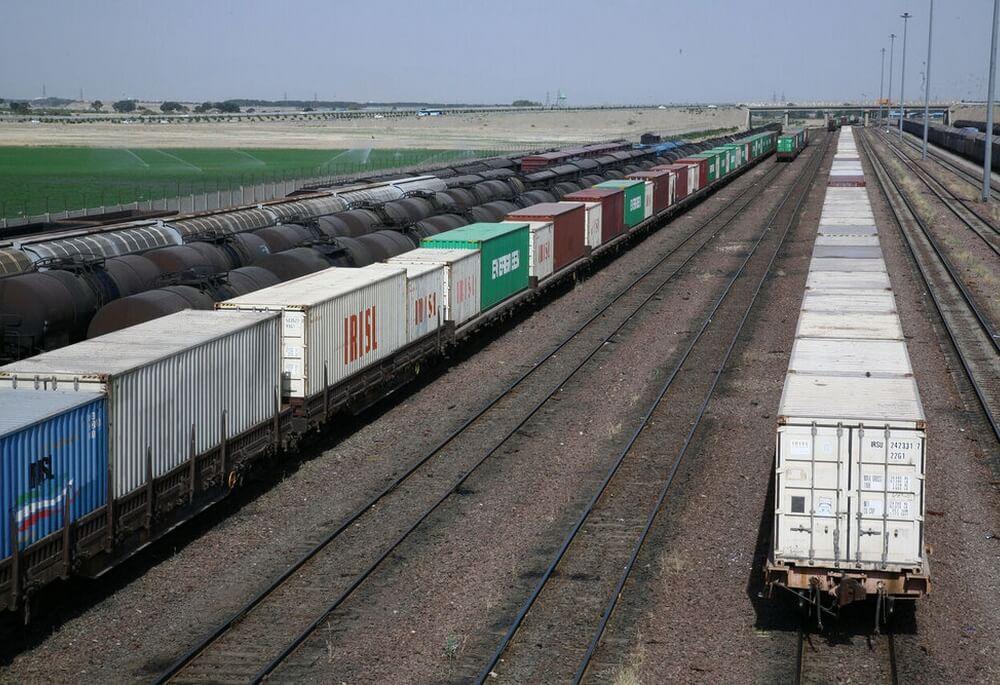
The latest restrictions have added a physical bottleneck. Behkish pointed to congestion at the Bazargan border and limited rail capacity through Sarakhs for goods arriving from China.
He warned that if the war and blockade continue for another two or three months, Iran’s stocks could fall sharply and shortages could increase.
He highlighted medicines as one concern. Poultry is another. Much of the feed used by poultry farms is imported in bulk by sea. Continued disruption could hit producers within one or two months and push up chicken and egg prices.
Industrial Fallout
Economist Pouya Firoozi sees the simultaneous fall in exports and imports as evidence of a broader trade and industrial slowdown. Non-oil exports were supposed to cushion the economy against restrictions on oil sales, but are now weakening themselves.
“Under sanctions, falling imports should not be interpreted as a success in reducing import dependence,” Firoozi said. “It is mainly a sign of financial and foreign-exchange constraints.”
Because a large share of Iranian imports consists of intermediate goods, production inputs and machinery, lower imports can directly weaken industrial and agricultural output.
Firoozi called for clearer exchange-rate policies and priority access to foreign currency for production inputs. He also recommended focusing on neighboring markets and major partners including China, Iraq, Turkey, Afghanistan, Oman and Pakistan, while improving transit links and border trade.
He argued that export development cannot wait until the war ends. Iran should focus on industries with comparative advantages and move toward higher-value products rather than relying heavily on raw materials and basic commodities.
Economic researcher Mohammad Reza Abdollahi said reopening trade routes should be the government’s priority.
“Even with lower imports, the country faces a floor of essential import needs,” Abdollahi said. Meeting that minimum could put additional pressure on foreign-exchange resources and, through a weaker rial, add to inflation.
He said alternative land routes through neighboring countries could partly offset maritime disruptions, although they are more expensive and have limited capacity. Abdollahi also called for transparent rules for allocating foreign currency among essential goods, production inputs and other imports.
Statistical Fog
Both Firoozi and Abdollahi also criticized restrictions on publishing trade statistics. They acknowledged that withholding sensitive information can be justified during wartime, but said aggregate data should remain available.
Firoozi warned that a prolonged lack of official statistics could push businesses toward unofficial information or delay investment decisions. “The confidentiality of some data should not become a permanent practice,” he said.
He also pointed to the experience of 1398-1400 (March 2019-March 2022), when some trade data were restricted. Businesses need official statistics to make decisions about purchasing raw materials, pricing and investment, he said.
Abdollahi said any decision to withhold data should have a clear legal basis and a defined timeframe. Publishing non-sensitive aggregate figures, he argued, would help preserve transparency without creating security risks.
The simultaneous decline in exports and imports points to more than a temporary disruption. It signals pressure on foreign-exchange earnings, supply chains and production at a time when Iran has limited room to absorb an economic shock.
For policymakers, the immediate challenge is to keep essential imports moving while finding every route for exports. If trade restrictions persist, however, the damage could extend beyond customs figures, weakening production, investment and purchasing power across the economy.