
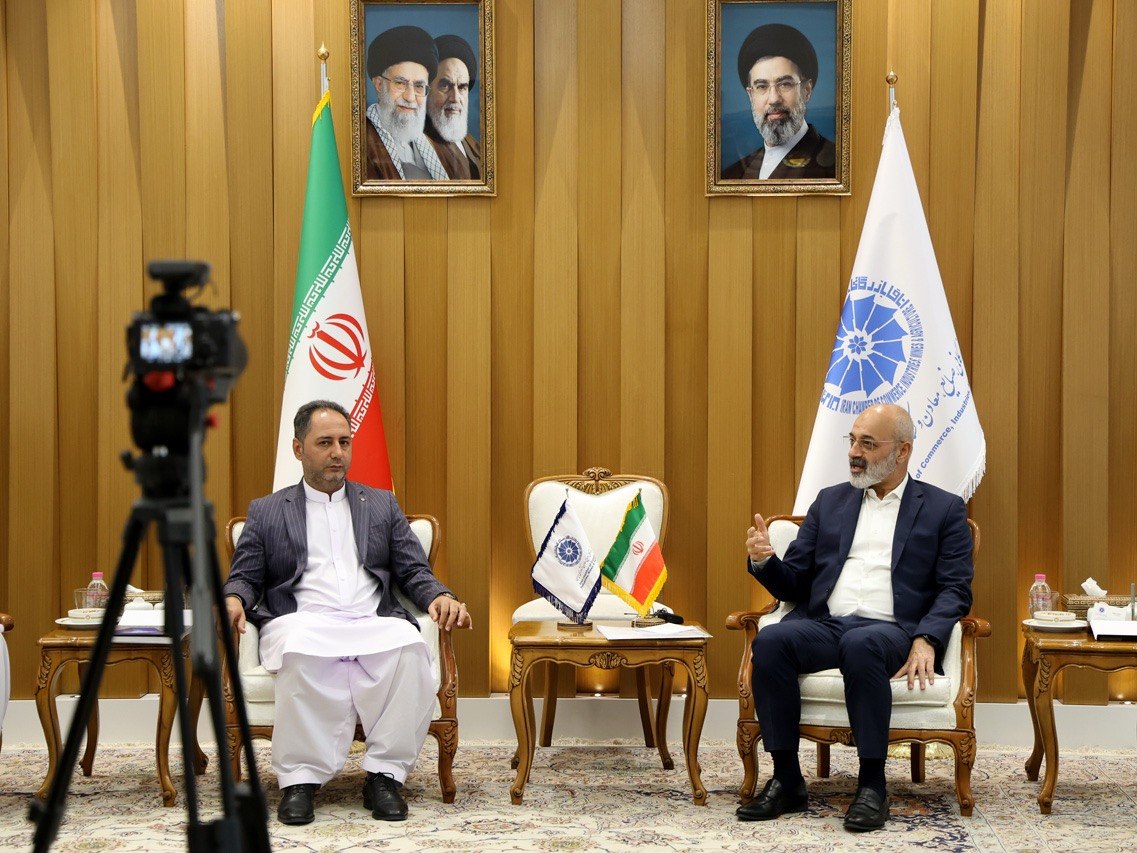
Iran and Afghanistan are moving to deepen economic ties beyond traditional trade, with Tehran proposing a joint mining committee to unlock what officials describe as "significant untapped potential" in Afghanistan's resource sector.
At a meeting in Tehran, Ghadir Ghiafeh, Vice President of Iran Chamber of Commerce, Industries, Mines and Agriculture (ICCIMA), called for a 5-to-10-year cooperation framework focused on mineral exploration, processing, and infrastructure investment. "We must move beyond the exchange of goods and think about joint investment in infrastructure and mining," he said, emphasizing Iran's 70 years of experience in copper processing and other mining industries as a valuable asset for technology and knowledge transfer.
Ghiafeh also pointed to Afghanistan's workforce as a foundation for rapid development, and expressed confidence that bilateral trade—currently around $3 billion—could double to $6 billion under the proposed roadmap. He stressed that both sides must remain committed to shared goals for the partnership to succeed.
Afghan officials painted an increasingly optimistic picture of their country's economic trajectory. Mahmoud Siadat, Head of the Joint Chamber of Iran and Afghanistan, described Afghanistan as "a workshop of construction and growth," noting that capital which had fled the country is now returning as security improves. He highlighted recent business events in Kabul and other cities where significant contracts were signed between Iranian and Afghan traders, and announced the launch of Afghanistan's first investment company, initiated by the Afghanistan Chamber of Commerce and Investment.
However, Afghan representatives acknowledged that investor confidence remains a work in progress. Mirajan Suleiman Khail, Deputy of the Afghanistan Chamber of Commerce and Investment, admitted that "perhaps investors have not yet found sufficient confidence" to enter the market. To address this, Afghan chamber members have taken the lead in domestic investment, hoping to set an example and gradually attract foreign partners—with Iran given priority consideration. "For 40 years, Iran has hosted and supported the Afghan people," he noted. "Now if investment is to happen, priority is with them."
Kamaluddin Tohid, Head of the Joint Chamber of Afghanistan and Iran, warned that Afghanistan's mines are being "divided and fragmented"—a trend that could undermine long-term development. He pointed out that Chinese and Uzbek companies have already activated over 50 mines, and urged Iranian firms not to lose ground. "We believe priority for cooperation is with Iranian companies," he stressed, adding that security conditions have improved and capital is flowing back into the country.
With Iran holding a deeper understanding of Afghanistan than most neighbors, Tohid expressed readiness to welcome Iranian traders and investors. For Iranian businesses, the message is clear: the window of opportunity is open, but competitors are already moving. The proposed joint mining committee could be the vehicle that transforms historic ties into enduring economic partnership—provided both sides act decisively.