
As water scarcity and climate pressures mount at home, Iran is looking north to Kazakhstan's vast steppes — not just for grain, but for a strategic foothold in Central Asia's agricultural future.
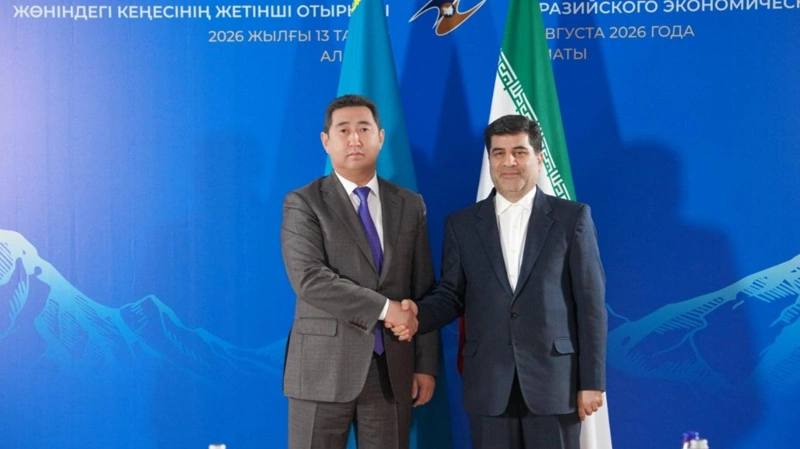
During a high-level meeting in Almaty on the sidelines of the seventh Eurasian Economic Union Agricultural Policy Council, Iranian and Kazakh officials agreed to expand extraterritorial cultivation, deepen joint investment, and accelerate agricultural trade. The talks signal Tehran's growing reliance on "land leasing diplomacy" to secure food supplies while strengthening political and economic ties with a key regional partner.
Deputy Agriculture Minister Akbar Fathi, who led the Iranian delegation, confirmed Tehran's interest in increasing imports of Kazakh agrifood products. His counterpart, Kazakh Agriculture Minister Aidarbek Saparov, described Iran as "one of the most promising markets" for Kazakhstan's agrifood exports — a characterization that underscores Astana's own ambitions to diversify export destinations beyond traditional partners.
A Strategic Pivot to Overseas Farming
At the heart of the Almaty talks was extraterritorial cultivation — Iran's policy of farming on foreign soil to compensate for domestic resource constraints. Under the Seventh National Development Plan (2023-2027), Iran has set a target of two million hectares of overseas farming, with Kazakhstan designated as a priority destination. This year alone, the plan envisions roughly 400,000 hectares under Iranian cultivation abroad.
For Tehran, the calculus is straightforward: Iran's arable land is finite, its water tables are depleting, and its population continues to grow. Farming in Kazakhstan — with its abundant rainfall and fertile black soil — offers a hedge against domestic production shortfalls, particularly for grains, oilseeds, and corn, all of which were emphasized during the talks.
Kazakhstan stands to benefit as well. Iranian investment in its agricultural sector brings technology, processing know-how, and access to new markets. The two sides also discussed expanding exports of Iranian fruits, dried fruits, and greenhouse products — a diversification that could help balance the trade ledger.
From Presidential Visits to Billion-Dollar Deals
Recent technical talks are part of a broader diplomatic push launched during Iranian President Masoud Pezeshkian's December 2025 visit to Astana. That trip yielded 14 bilateral agreements spanning transport, logistics, cultural exchange, and healthcare, alongside a joint statement committing to "deepening strategic cooperation."
More significantly, it produced a roadmap to boost bilateral trade to $3 billion — a steep climb from the current $350–430 million level. Private-sector engagement has been robust: nine cooperation agreements were signed during the presidential visit, including company-level deals worth over $1 billion in sectors ranging from copper production to food processing.
At a concurrent business conference, President Pezeshkian described Kazakhstan as a "strategic partner," signaling that economic ties are being elevated to match the political warmth that has characterized bilateral relations in recent years.
The Infrastructure Dimension
Trade expansion, however, hinges on logistics. Both sides recognize that the current volume of cargo moving between Iran and Kazakhstan falls short of potential. The International North–South Transit Corridor (INSTC) is seen as the primary artery, with rail freight between the two countries surging 69 percent in 2025. Yet capacity constraints remain.
In June 2026 talks, Kazakhstan's Deputy Prime Minister Serik Zhumangarin proposed a joint roadmap to modernize INSTC infrastructure, aiming to raise annual capacity to 20 million tons. Kazakhstan is also exploring the possibility of granting Iranian companies access to its Caspian ports of Aktau and Kuryk — a move that could shorten supply chains and reduce transit costs.
Another promising route is the China–Kazakhstan–Turkmenistan rail corridor, which connects to Iran at the Incheh Borun border crossing. Iranian officials have described this as an underutilized asset, capable of unlocking trade flows from Central Asia to Iran's southern ports and beyond.
Halal Certification as a Market Bridge
Beyond production and transport, the two sides are eyeing the lucrative halal food market. Iranian officials emphasized that all agricultural and food products from Iran are halal-certified — a brand increasingly in demand globally. Recognition of halal standards within the EAEU framework could grant Iranian products preferential access to the union's 180-million-strong consumer market, as well as broader markets in Southeast Asia and West Asia.
For Kazakhstan, aligning with Iran's halal ecosystem could open doors to markets where certification remains a barrier to entry. The two sides agreed to intensify cooperation on seed production, modern farming technologies, and investment projects that could create integrated production and logistics chains.
A Quiet Realignment
Taken together, the Almaty meeting and the broader bilateral momentum reflect a quiet but consequential realignment in Central Asia's agricultural landscape. Iran, isolated from many Western markets and grappling with domestic resource constraints, is turning to its northern neighbor as a reliable partner for food security. Kazakhstan, seeking to diversify its export portfolio and attract foreign investment, is reciprocating with political goodwill and economic openness.
As the two nations move from memorandums to operational projects, the success of their partnership will ultimately be measured not by the volume of agreements signed, but by the volume of grain harvested, produce traded, and value chains forged across the Caspian.