
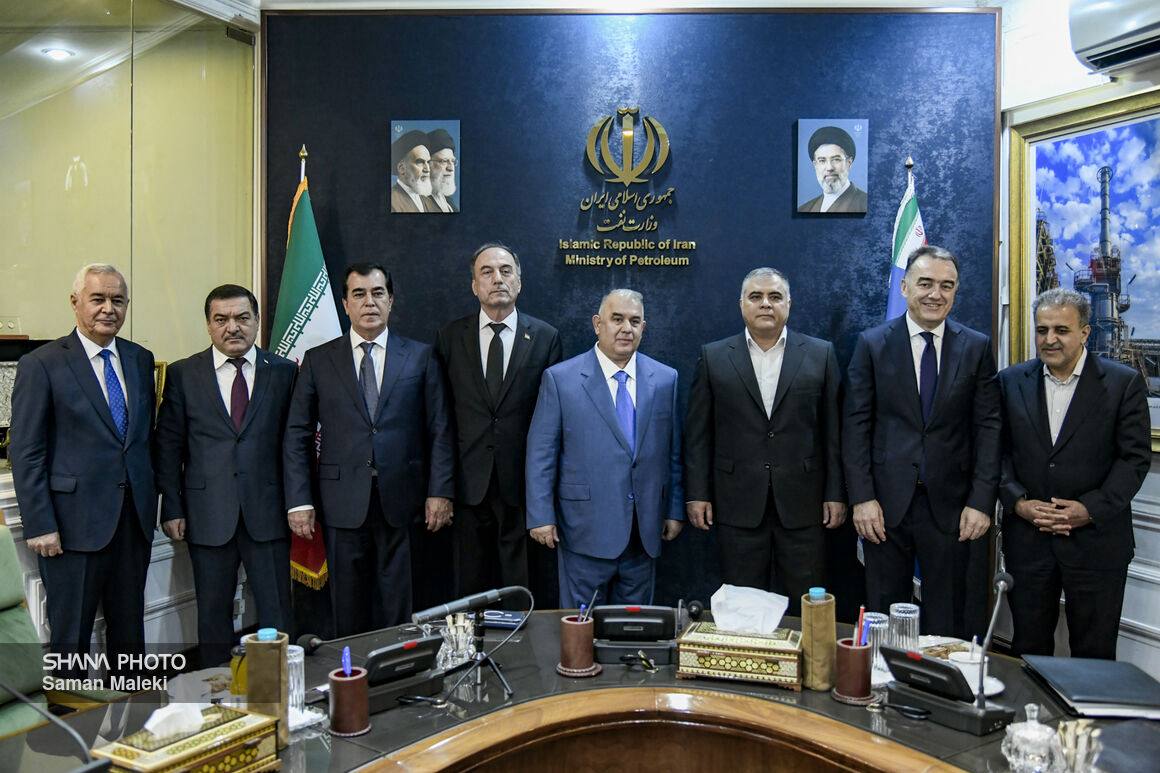
Iran and Tajikistan are turning shared language and history into hard commercial reality. On August 15, senior officials from both countries agreed to establish a joint working group to design mechanisms for exporting Iran's surplus oil products and supplying crude to Tajikistan's refineries — a move that could reshape energy flows in Central Asia.
The agreement, announced after talks in Tehran between Iran's Oil Minister Mohsen Paknejad and Tajikistan's Energy Minister Dalir Juma, envisions a long-term contract framework. A technical committee will now hammer out the details, including product specifications, volumes, and logistics.
"Tajikistan is seeking to increase imports of oil products from Iran, especially at a time when many countries face energy challenges," Juma said, noting that cooperation in the oil sector could become a central pillar of bilateral relations.
Paknejad confirmed that a significant portion of the cooperation is already being implemented, and that this was the third high-level energy meeting in two years — a sign of sustained momentum. The volume of trade, he added, will depend on logistics capacities, which are themselves under active review.
A Year of Building Blocks
The energy push is no isolated event. Throughout 2026, Tehran and Dushanbe have systematically strengthened ties across transport, industry, and trade.
In July, Iran's Transport Minister Farzaneh Sadegh met with Tajikistan's Deputy Transport Minister to fast-track cooperation on transit corridors, port access, rail freight, and air connectivity. The two sides are exploring new rail routes and aiming to increase flight frequencies between cities — essential infrastructure for any meaningful trade expansion.
In June, the two countries' industry ministers met on the sidelines of the Shanghai Cooperation Organization summit, agreeing to streamline administrative processes and boost exchanges in mining, pharmaceuticals, and textiles. The goal: turn memoranda into tangible results.
The strategic blueprint, however, was drawn in May at the 18th session of the Iran-Tajikistan Joint Economic Committee in Dushanbe. There, Juma declared Iran "one of Tajikistan's most important partners in the region," citing a sharp rise in first-quarter trade. Iran's Energy Minister Abbas Aliabadi struck a defiant note, declaring that "6,000 years of shared culture are unbreakable" and calling the committee's outcomes "a covenant for action, not words."
A Billion-Dollar Horizon
Presidential backing has given the partnership added weight. In a recent phone call, Iranian President Masoud Pezeshkian told his Tajik counterpart Emomali Rahmon that Tehran is ready to expand cooperation across energy, transport, and culture. Rahmon, for his part, emphasized dialogue as the only path to resolving West Asian tensions — a diplomatic alignment that reinforces economic engagement.
The numbers underline the ambition. In February, Iran's Industry Minister Seyed Mohammad Atabak announced a bilateral trade target of $1 billion in the near future. During a visit to Dushanbe, he secured agreement on a roadmap to accelerate existing deals, boost private sector involvement, and strengthen technology transfer.
In mining — a sector with significant untapped potential — the two countries have formed a joint task force. Iran's IMIDRO will lead efforts to reconstruct Tajikistan's mining industry through Iranian engineering expertise, training programs, and structured systems for mineral processing.
From Rhetoric to Reality
What sets this moment apart is execution. The August 15 energy deal is not a vague pledge but a concrete step toward a long-term contractual relationship. Combined with transport upgrades, industrial cooperation, and a clear $1 billion target, the Iran-Tajikistan partnership is moving from diplomatic niceties to operational delivery.
For both countries, the calculus is straightforward. Iran gains a reliable outlet for its surplus oil products and a strategic foothold in Central Asia. Tajikistan secures energy supplies amid global volatility and leverages Iranian expertise to modernize its infrastructure and mining sector.
As Aliabadi put it: "The end of this session is not the end of the work, but the beginning of a heavy responsibility." With working groups now being formed and logistics being mapped, the next few months will determine whether ambition translates into barrels on railcars and goods on shelves. But the direction is clear — and the historical ties that bind Tehran and Dushanbe are finally being put to practical use.