
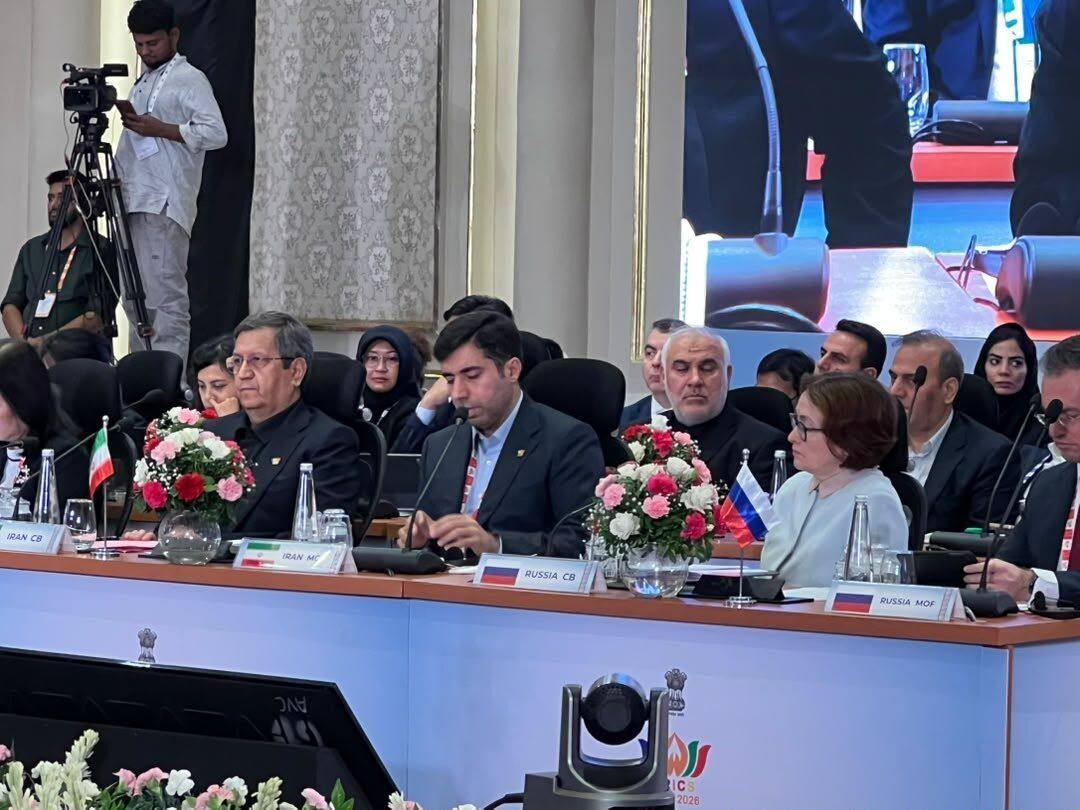
As finance chiefs from BRICS nations gather in the pink city of Jaipur for their annual meeting, Iran has emerged as one of the most vocal advocates for transforming the bloc from a forum for dialogue into a vehicle for concrete financial action.
Abdolnasser Hemmati, Governor of Iran's Central Bank, used back-to-back sessions on August 12-13 to press for what he called a "dedicated BRICS financial corridor" — a network that would link national payment systems and reduce the bloc's reliance on Western financial channels.
"BRICS will have the greatest impact when it can translate policy dialogues into practical initiatives," Hemmati told delegates on the opening day, before doubling down on the second day with a call to "create operational, secure, and sustainable infrastructure for cross-border payments."
The Iranian governor's push comes as the bloc, now expanded to include Iran, Egypt, Ethiopia, the UAE, and Indonesia alongside its original five members, seeks to carve out greater financial independence. A key priority is connecting fast-payment systems and exploring central bank digital currencies to lower transaction costs and boost trade in local currencies.
Hemmati confirmed that Tehran has already begun examining the technical and legal dimensions of linking its payment systems with other members, adding that Iran is ready to help draft an "operational roadmap" for the project.
Membership in NDB on the Table
In a significant development, Hemmati held separate talks with Dilma Rousseff, president of the New Development Bank (NDB) — BRICS' flagship financial institution. Rousseff reportedly described Iran's potential accession as "important" and acknowledged the country's capacity to contribute to regional and international cooperation.
Iran is currently finalizing its membership in the NDB, which finances infrastructure and sustainable development projects across member states. Hemmati described the bank as "one of the group's most important institutional achievements."
Resilience Amid Challenges
Hemmati did not shy away from the geopolitical tensions shadowing the meeting. Referring to the "military aggression" against Iran's sovereignty — an apparent reference to recent Israeli strikes — he insisted that "economic and financial stability is unattainable without peace, respect for international law, and adherence to the principles of the United Nations Charter."
The Iranian delegation also included Deputy Finance Minister Mehdi Heydari, who earlier backed the summit's four pillars — resilience, innovation, cooperation, and sustainability — while calling for practical financing mechanisms including local currency lending and currency risk hedging tools.
India, as the current BRICS president, is hosting this year's gathering under the theme of building resilience against global economic shocks. The bloc is not pursuing a common currency, officials clarified, but is instead focusing on gradual financial integration that could eventually reshape the international monetary order.
For Iran, the stakes are high. Hemmati's repeated emphasis on "practical initiatives" reflects Tehran's urgency to deepen economic ties with emerging powers as it navigates a complex landscape of sanctions and regional tensions. Whether BRICS can deliver on the Iranian governor's ambitious vision remains to be seen — but in the corridors of Jaipur, the message was unmistakably clear: talk is no longer enough.