
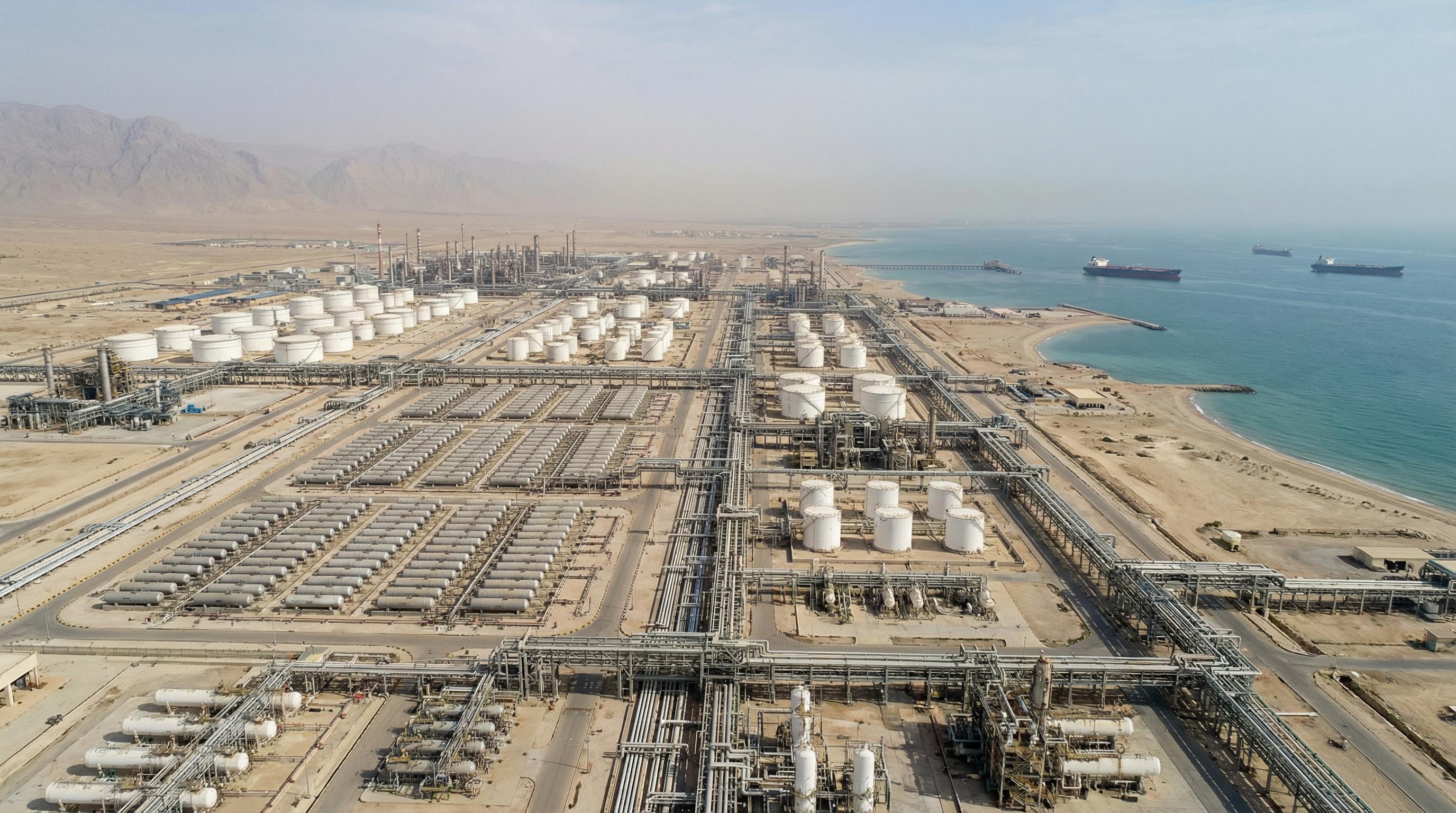
China has emerged as the main buyer of Iran’s petrochemical products, accounting for about 52% of Iran’s exports of organic chemicals and plastics. The concentration gives Tehran an important market but also exposes the industry to risks linked to dependence on a single customer. Iran is now seeking to turn its relationship with China from a trading arrangement into a partnership involving investment, technology transfer and joint production.
A report by Iran’s Parliament Research Center says cooperation between Tehran and Beijing in petrochemicals remains largely focused on trade and exports. It argues that a strategic partnership would require clearly defined common interests, financing models and mechanisms for technology transfer.
Iran’s petrochemical industry has become an important part of the country’s non-oil economy, but its development has slowed because of international sanctions, limited access to technology and specialized equipment, weak investment and natural gas shortages. Damage to industrial infrastructure during the recent war has added further pressure.
The industry also faces a gap between installed capacity and actual production. Some plants cannot operate at full capacity because of feedstock shortages, maintenance problems and limited access to modern equipment. Under Iran’s seventh development plan, nominal petrochemical capacity is expected to rise by about 37%, a target linked to the government’s economic growth ambitions.
Moving Up the Value Chain
Experts say increasing basic production alone will not give Iran a sustainable competitive advantage. Mehdi Feyz, a petrochemical expert, said Iran needs to focus on downstream development, foreign investment and export market diversification.
Iran remains heavily dependent on basic products such as methanol. These commodities are easy to track and are traded in large volumes, making them more vulnerable to sanctions and trade restrictions. Higher-value products such as polyethylene, polypropylene, engineering polymers and specialized chemicals have wider applications and diversified markets.
Developing these products could increase export revenues, create jobs and make Iran’s non-oil trade more resilient. It could also help the country capture a larger share of the global petrochemical value chain.
China could become an important partner in this transition. Iran is one of the world’s major methanol producers, while Chinese companies have strong expertise in methanol-to-olefins technology. Joint projects could convert surplus methanol into polymer products, allowing Iran to export higher-value goods instead of basic methanol.
Methanol-to-gasoline projects could provide another way to use capacity. Developing liquid feedstock chains based on naphtha, gas condensates and other oil products could also reduce the industry’s dependence on natural gas at a time when energy shortages are increasingly affecting production.
However, China’s dominant position in Iran’s export market remains both an opportunity and a risk. Hossein Sedaqat, another petrochemical expert, said dependence on one market can weaken exporters’ bargaining power. Changes in Chinese demand or trade policies could affect Iranian producers, while discounts on Iranian exports have already reflected some of this imbalance.
At the same time, China’s dependence on Iranian petrochemical supplies could encourage Chinese companies to invest in Iranian production. Such investment could create stronger economic interdependence and help move the relationship beyond simple buying and selling.
The ownership structure of Iran’s petrochemical industry is another obstacle. A significant share of companies is controlled by pension funds, which face large financial obligations. As a result, much of their income is used for current payments rather than reinvestment. Long-term petrochemical development, however, requires substantial capital.
The Parliament Research Center also points to an opportunity in China’s export markets. China exports about $63 billion worth of petrochemical products annually to markets in West Asia, Africa and Europe. Joint production in Iran could allow Iranian companies to capture part of this market while participating more deeply in the value chain.
Such cooperation would need safeguards. Experts argue that direct investment and equity participation should be preferred to heavy borrowing. New agreements should include commitments on technology transfer, worker training, feedstock supply, downstream development and joint research.
For Iran, the key question is whether China will remain mainly its biggest petrochemical buyer or become an industrial partner. If cooperation increases the share of higher-value products in Iran’s exports, it could strengthen the country’s position in global markets. If exports simply grow without deeper investment and value-chain development, however, Iran may remain dependent on a single market.