
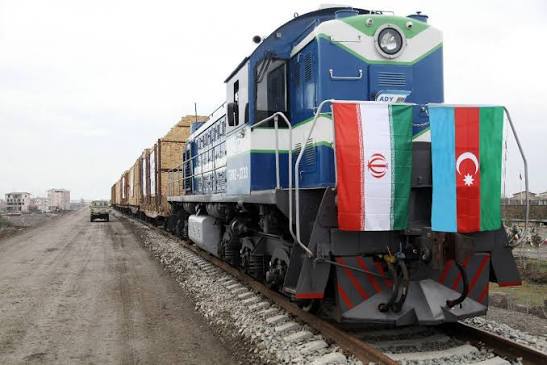
In a significant development for regional commerce, Iran and the Republic of Azerbaijan are rapidly expanding their economic cooperation through a series of new agreements and infrastructure projects. The two countries, sharing a border that stretches hundreds of kilometres, are positioning themselves as strategic partners in connecting the Caucasus, Central Asia and the Persian Gulf.
The Bileh Savar border crossing in Iran's northwestern Ardabil Province has emerged as a vital trade artery, operating around the clock to handle growing commercial volumes. Over the past year alone, this single crossing recorded $268 million in exports, demonstrating remarkable resilience despite regional instability and external pressures that might have disrupted trade flows elsewhere.
At the heart of this deepening relationship lies a customs cooperation memorandum signed at the Bileh Savar zero point. Foroud Asgari, Deputy Minister of Economy and Head of Iran's Customs Administration, and Shahin Baghirov, head of Azerbaijan's State Customs Committee, formalised a commitment to accelerating customs clearance processes. This agreement aims to tackle border congestion, which remains the primary obstacle to smoother bilateral trade.
"Asgari has identified border congestion as the primary challenge," noted observers familiar with the negotiations. However, optimism remains high that planned infrastructure projects will deliver measurable improvements, particularly bridges under construction at the Astara and Nakhchivan crossings. These projects, once completed, are expected to significantly ease the movement of commercial vehicles between the two nations.
Baghirov welcomed the establishment of 24-hour online communication with Iran's customs chief, describing bilateral trade as "important" and emphasising that such direct channels would help prevent costly delays in customs procedures.
Ardabil Province, with its 382 kilometres of shared border, has become a central actor in this expanding relationship. The province produces 4.5 million tons of crops annually, accounting for 4% of Iran's agricultural output, while also contributing significant shares of the nation's tyre and mineral water production.
Governor-General Masoud Emami Yeganeh has made border trade development a priority, undertaking multiple visits to Azerbaijan to advance economic diplomacy. "We are interested in having joint investments and joint projects, and for our peoples to become closer to each other," he stated during meetings with Azerbaijani business leaders. Plans are underway to establish a permanent exhibition of Iranian products in Azerbaijan and a reciprocal exhibition of Azerbaijani goods in Iran.
The broader bilateral relationship has been formalised through an ambitious cooperation document signed at the 17th session of the Iran–Azerbaijan Joint Economic Committee. The memorandum outlines joint initiatives across ten sectors, including transport, energy, tourism, agriculture, customs, industry and investment.
In the transport sector, key infrastructure projects include the Kalaleh–Aghband bridge, the Astara bridge, and the Kalaleh–Siahroud rail link, many of which are already in advanced stages. Energy cooperation covers plans to connect the power grids of Iran, Azerbaijan and Russia, along with joint projects related to the Khoda Afarin and Qiz Qalesi dams.
Farzaneh Sadegh, Iran's Minister of Transport and Urban Development, highlighted Iran's ambitious target to increase transit volumes on the western branch of the International North–South Transit Corridor to 15 million tons by 2030. Current figures already show substantial cross-border freight activity: approximately 120,000 Iranian trucks transited through Azerbaijani territory over the past year, while more than 50,000 Azerbaijani trucks entered Iran. Trade between the two countries has reached approximately $650 million over the past two years.
Investment cooperation is also advancing rapidly.
Mehdi Heydari, Deputy Minister of Economic Affairs and Finance, presented a list of projects prepared for foreign investment in Iran during meetings with Azerbaijani counterparts. Yusuf Abdullayev, head of Azerbaijan's Export and Investment Agency, declared readiness to hold the first meeting of the Joint Investment Committee and extended an invitation for Iranian participation in the Azerbaijan International Investment Summit scheduled for September 2026.
"The history of Iranians' activities in Azerbaijan's economy demonstrates the potential for increased cooperation," Abdullayev noted, describing the Joint Investment Committee as a valuable advantage for structuring collaboration.
The economic momentum has been reinforced by direct engagement at the highest political levels. During her visit to Baku, Minister Sadegh met with President Ilham Aliyev, conveying greetings from President Masoud Pezeshkian. President Aliyev expressed satisfaction with the expansion of bilateral relations, emphasising that jointly implemented projects would provide extensive opportunities for both countries and the region.
Political and economic observers have acknowledged that Iran, with its 15 neighbouring countries and extensive land, sea and rail borders, is effectively economically uncontainable. The expanding partnership with Azerbaijan demonstrates how neighbouring states can leverage geographic proximity, cultural commonalities and mutual economic interests to build a more prosperous and integrated region.
As both countries work toward their ambitious transit and trade targets, the Iran-Azerbaijan relationship stands as a compelling example of how strategic economic diplomacy can transform border regions into dynamic hubs of commerce and shared prosperity.