
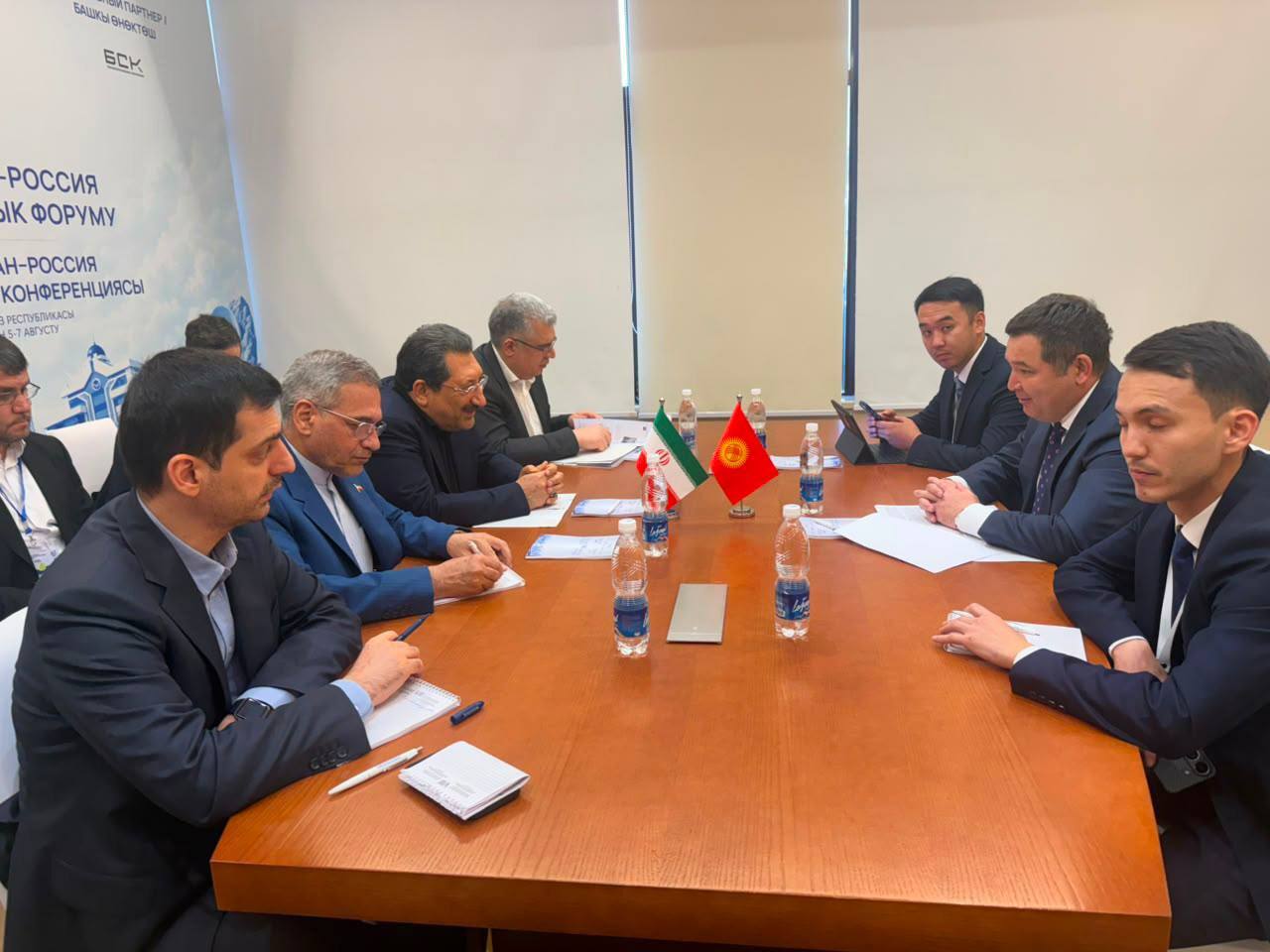
In a move signaling deeper Central Asian engagement, Iran and Kyrgyzstan have agreed to significantly expand cooperation across multiple economic sectors, including mining, energy, transport, and free trade zones, as both nations seek to unlock untapped potential in their bilateral relationship.
Iran's Minister of Industry, Mining and Trade, Seyyed Mohammad Atabak, met his Kyrgyz counterpart, Minister of Economy and Commerce Sydykov Bakyt Tolomushevich, for wide-ranging talks that covered everything from joint industrial ventures to regional infrastructure projects.
Both ministers acknowledged the substantial economic capacities available to their countries and stressed the need to translate these into concrete investment and trade partnerships, particularly within the frameworks of the Eurasian Economic Union and the Shanghai Cooperation Organization.
A key focus of the discussions was joint production aimed at exporting to third-country markets, with both sides expressing interest in collaboration on knowledge-based products, pharmaceuticals, and medical equipment. The ministers also called for deeper ties between their respective free zones and increased investment in industry and mining.
In the mining and energy sector, Kyrgyzstan's rich mineral resources took center stage. Iranian officials announced Tehran's readiness to offer technical and engineering services, assist in exploration, extraction, and processing, and transfer technical knowledge to modernize Kyrgyzstan's mining industries.
Transport and transit cooperation emerged as a major pillar of the talks. The two sides agreed to activate the strategic Bandar Abbas–Osh railway corridor, explore direct flight connections, reduce transit costs, and accelerate the completion of regional transit routes. Both nations also underlined their interest in the Belt and Road Initiative, with Iran positioning itself as a key transit gateway to connect Kyrgyzstan to broader regional and international markets.
Beyond transport, the discussions touched on financial and logistical infrastructure. The ministers agreed to develop banking and logistics networks, establish a joint banking committee, promote the use of national currencies in bilateral trade, create joint investment funds, and explore modern financing mechanisms to support their growing partnership.
Observers view the meeting as part of Iran's broader strategy to strengthen ties with Central Asian states, leveraging its geographic position and industrial capabilities to become a vital economic partner for landlocked countries like Kyrgyzstan seeking diversified trade routes and investment partners.