
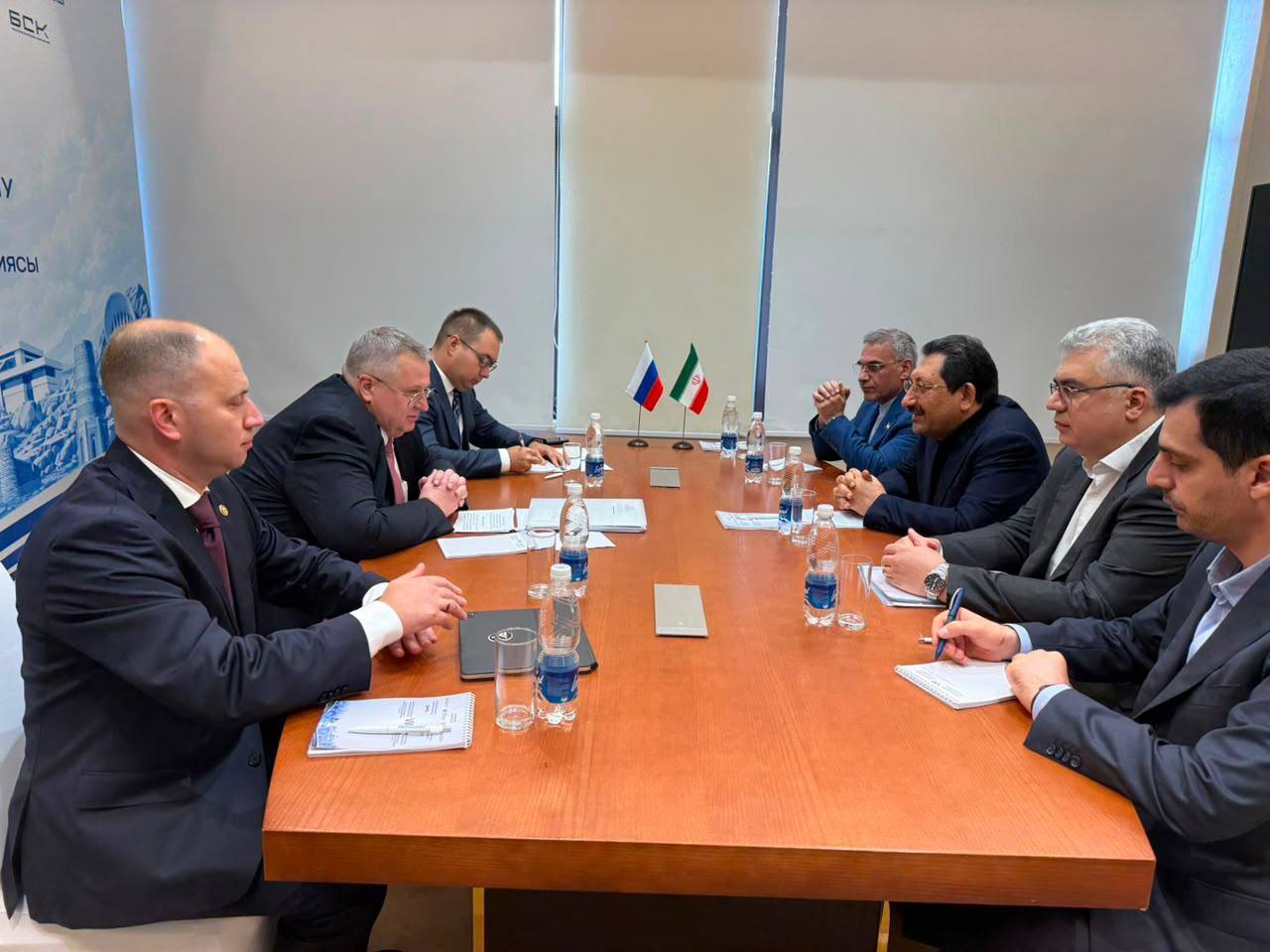
In a clear signal of deepening ties between two economies under Western pressure, Iranian and Russian officials have pledged to dramatically expand their trade and industrial cooperation, with a particular focus on removing banking and transport obstacles that have long hindered bilateral commerce.
During high-level meetings on Thursday, both sides outlined ambitious plans that go far beyond conventional trade, aiming to build a comprehensive strategic partnership that could reshape economic dynamics in the region.
Seyyed Mohammad Atabak, Iran's Minister of Industry, Mining and Trade, stressed that despite a significant rise in exchanges over the past three years, the current trade volume is merely a fraction of what is achievable. He urged that the free trade agreement between Iran and the Eurasian Union be utilized to its fullest potential, while fast-tracking the strategically vital Rasht–Astara railway project.
"We have laid the groundwork for conducting trade in national currencies," Atabak said, citing progress on linking Iran's Shetab and Russia's Mir payment networks, advancing a monetary agreement between central banks, and expanding correspondent banking relations. He called for these mechanisms to become fully operational, alongside the establishment of a unified digital customs system and a green customs corridor to slash clearance times.
Atabak also announced Iran's readiness to formulate a joint industrial, mining, and trade working group, expressing hope that coordinated efforts could elevate Tehran-Moscow relations to a new level of strategic cooperation.
Russian Deputy Prime Minister Alexei Overchuk, who conveyed condolences for Iranian casualties in what he called the "third imposed war," reaffirmed Moscow's determination to strengthen ties across all economic sectors.
In a separate meeting, Deputy Minister Mohammad Sadegh Mofatteh urged Russian authorities to facilitate the participation of Iranian engineering firms in Russian projects, citing the country's proven expertise in construction, petrochemicals, infrastructure, and greenhouse development. He noted that Iran is a major supplier of cement, tiles, ceramics, elevators, and other building materials — all of which could find a ready market in Russia.
Mofatteh extended an open invitation to Russian investors to explore joint ventures in Iran's mining sector, specifically in cathode copper production — a commodity Russia needs. He also called for more frequent exchanges of trade delegations and specialized exhibitions to help both sides better understand each other's production capacities and market demands.
"To identify real opportunities," Mofatteh stated, "Russia must provide Iran with its technical standards, product requirements, and a clear list of goods it needs. Only through continuous specialized dialogue and private-sector engagement can we unlock the full potential of this relationship."
Observers view the meetings as part of a broader shift by both nations to build economic resilience against sanctions and create alternative trade routes and payment systems outside Western-controlled frameworks.