
Tehran is strategically repositioning its economic diplomacy on two critical fronts—rekindling commercial bonds with historical European partner Italy while simultaneously deepening technical cooperation in water and soil management—as the country navigates post-sanctions opportunities and mounting environmental challenges.
In a series of high-level diplomatic and technical engagements this week, Iranian officials have signaled a comprehensive strategy to revitalize economic relations with Italy, leveraging private sector capabilities and institutional frameworks while advancing specialized agricultural collaboration that addresses the nation's pressing resource management needs.
Private Sector at the Helm of Trade Revival
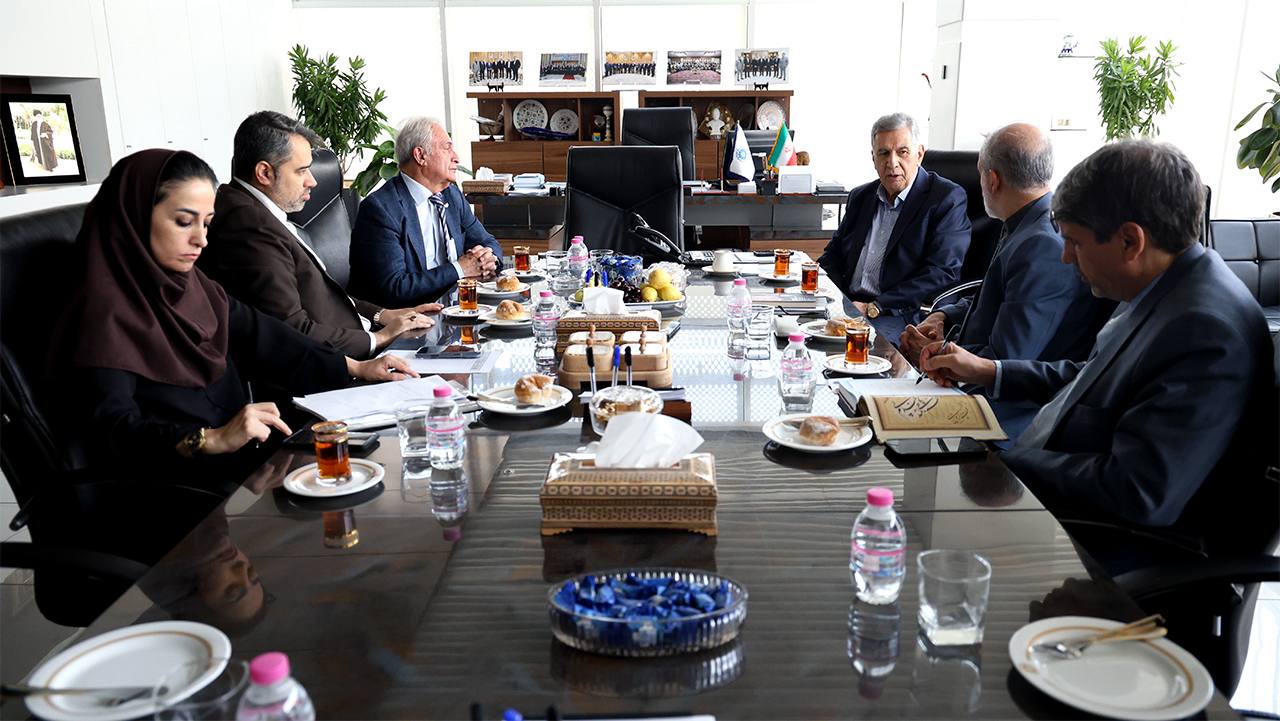
At a pivotal meeting in Tehran, Ali-Akbar Rezaei, Iran's ambassador-designate to Italy, joined Samad Hassanzadeh, head of the Iran Chamber of Commerce, Industries, Mines and Agriculture (ICCIMA), to map out a roadmap for restoring Italy's position as one of Iran's foremost European trading partners. The discussions underscored a shared recognition that the private sector must drive this economic renaissance.
Hassanzadeh emphasized Iran's substantial competitive advantages, including a highly skilled workforce, abundant energy resources, robust infrastructure, and deep cultural heritage. "By harnessing embassy capacities within a framework of stability and constructive engagement, we can breathe new life into partnerships with our traditional allies," he stated.
The ICCIMA chief identified Italy as a nation with extraordinary untapped potential for collaboration, noting that Italian technology and equipment form the backbone of much of Iran's industrial infrastructure. He proposed concrete avenues for cooperation, including Iran's capability to supply agricultural and greenhouse products to Italian markets, alongside significant opportunities in tourism, academic exchanges, and cultural diplomacy.
Particular emphasis was placed on the Iran-Italy Joint Chamber of Commerce, which Hassanzadeh described as an "invaluable institutional asset" that warrants greater attention given the strategic importance of ties with industrialized nations in Iran's current economic trajectory.
Institutional Bridges and Historical Ties
Ahmad Pourfallah, head of the joint chamber, provided historical context, revealing that the Iran-Italy Joint Chamber ranks among the oldest such institutions in the country and remains uniquely positioned with a sister chamber in Rome—a distinction that facilitates seamless participation in each other's programs and assemblies.
Pourfallah recalled Italy's historical status as Iran's premier European trading partner, with bilateral trade volumes reaching impressive heights. He called upon the Ministry of Foreign Affairs to forge closer institutional links with joint chambers, urging greater utilization of these platforms for economic diplomacy.
Iran's capabilities in specialized exhibitions—particularly in stone, ceramics, and gold—were highlighted as showcase opportunities. Pourfallah noted Iran's strong standing in the gold industry, pointing to joint cooperation potential that could benefit both nations.
A New Role for Diplomatic Missions
Seyyed Hamed Askari, Deputy for International Affairs at ICCIMA, proposed a fundamental reimagining of Iran's diplomatic presence in Italy. He argued that the embassy in Rome should evolve beyond traditional functions to become a "trade development center" with an economic-first approach.
Among his concrete recommendations: identifying priority industrial sectors for collaboration, re-establishing communication channels with Italian small and medium enterprises (SMEs), and developing a comprehensive database of potential partners. Askari emphasized the importance of joint investment ventures in third-country markets, identifying Central Asia, Iraq, the Caucasus, and Africa as promising frontiers.
Technology transfer, engagement with Italian industrial districts, and a structured presence at specialized exhibitions were identified as key pillars. Askari also stressed the need to bridge academia and industry, noting the significant number of Iranian students in Italy who represent a valuable talent pool for industrial cooperation.
Perhaps most crucially, Askari called for a "redefinition of Iran's image" among Italian economic actors. Years of reduced trade engagement have eroded Italian companies' awareness of Iran's contemporary economic capacities—a deficit that must be addressed through targeted meetings and investment opportunity presentations.
Strategic Recalibration at the Diplomatic Level
Ambassador-designate Rezaei characterized the proposals as "practical and actionable," pledging full integration into embassy programming. He framed Iran's foreign policy as operating on two fundamental axes: ensuring national security and achieving national development. With the passage of recent challenging circumstances, Rezaei signaled that the development agenda would receive renewed emphasis.
Acknowledging foreign interest in Iranian cooperation, Rezaei stressed the need to marshal all available capacities to meet development objectives. "Relations with the East gain firmer footing when ties with the West are also sustained," he observed, adding that the global economy cannot be navigated selectively.
While sanctions remain the most formidable barrier to cooperation, Rezaei insisted that efforts to expand economic relations would continue unabated. He cited Italy's independent foreign policy stance as an opportunity for strengthened bilateral engagement.
Rezaei concluded by affirming the indispensable role of the private sector in economic development, stressing that the embassy and Foreign Ministry stand ready to fully cooperate with joint chambers and economic actors. The ICCIMA, he noted, serves as the authoritative voice of Iran's private sector.
Agricultural Technology: A New Frontier
Parallel to these commercial discussions, a significant technical breakthrough emerged from a joint webinar between Iran's Ministry of Agriculture and the Italian Agricultural Association. Safdar Niazi Shahraki, Deputy Minister of Agriculture for Water and Soil Affairs, announced the commencement of expanded technical cooperation aimed at protecting fundamental resources and deploying modern global agricultural technologies.
The July 10 virtual meeting convened senior officials from both sides, including Stefano Ianiri, head of the Italian Agricultural Association; Kianirad, Iran's representative and permanent ambassador to the FAO; and specialists from Iran's Soil and Water Research Institute.
Niazi Shahraki framed the initiative within Iran's macro-policies for food security, sustainable production, and resource protection. He presented a comprehensive report on the status of agricultural lands, irrigation methods, and water usage rates, emphasizing soil as the foundation of food security and life itself.
The official stressed the critical need to establish balance among water, soil, and environmental components as prerequisites for sustainable production. Key areas identified for collaboration include improving water productivity, smart agricultural technologies, salinity management, soil salinity control, and water desalination—all pressing challenges facing Iran's agricultural sector.
Niazi Shahraki extended a formal invitation to the Italian delegation to visit Iran and observe the country's water and soil achievements and capacities firsthand.
Stefano Ianiri acknowledged the Italian Agricultural Association's expertise in scientific, research, and software domains, expressing appreciation for the collaborative opportunity and outlining the association's areas of activity.
The webinar featured active participation from 19 private sector companies, with two firms presenting their specialized capabilities.
Both sides agreed to establish a structured framework for ongoing technical dialogues, with follow-up meetings planned in specialized formats involving relevant offices.
Strategic Intersection
These parallel diplomatic and technical tracks represent a coherent strategy that leverages Italy's historical engagement with Iran while addressing contemporary challenges. The commercial framework provides the institutional architecture and private sector dynamism necessary for sustained economic engagement, while the agricultural partnership addresses Iran's urgent need for resource-efficient technologies.
As Iran charts its post-sanctions economic trajectory, the dual-track approach with Italy offers a model for how historical relationships can be revitalized through institutional innovation, private sector leadership, and targeted technical cooperation—all while navigating the constraints and opportunities of a complex global environment.