
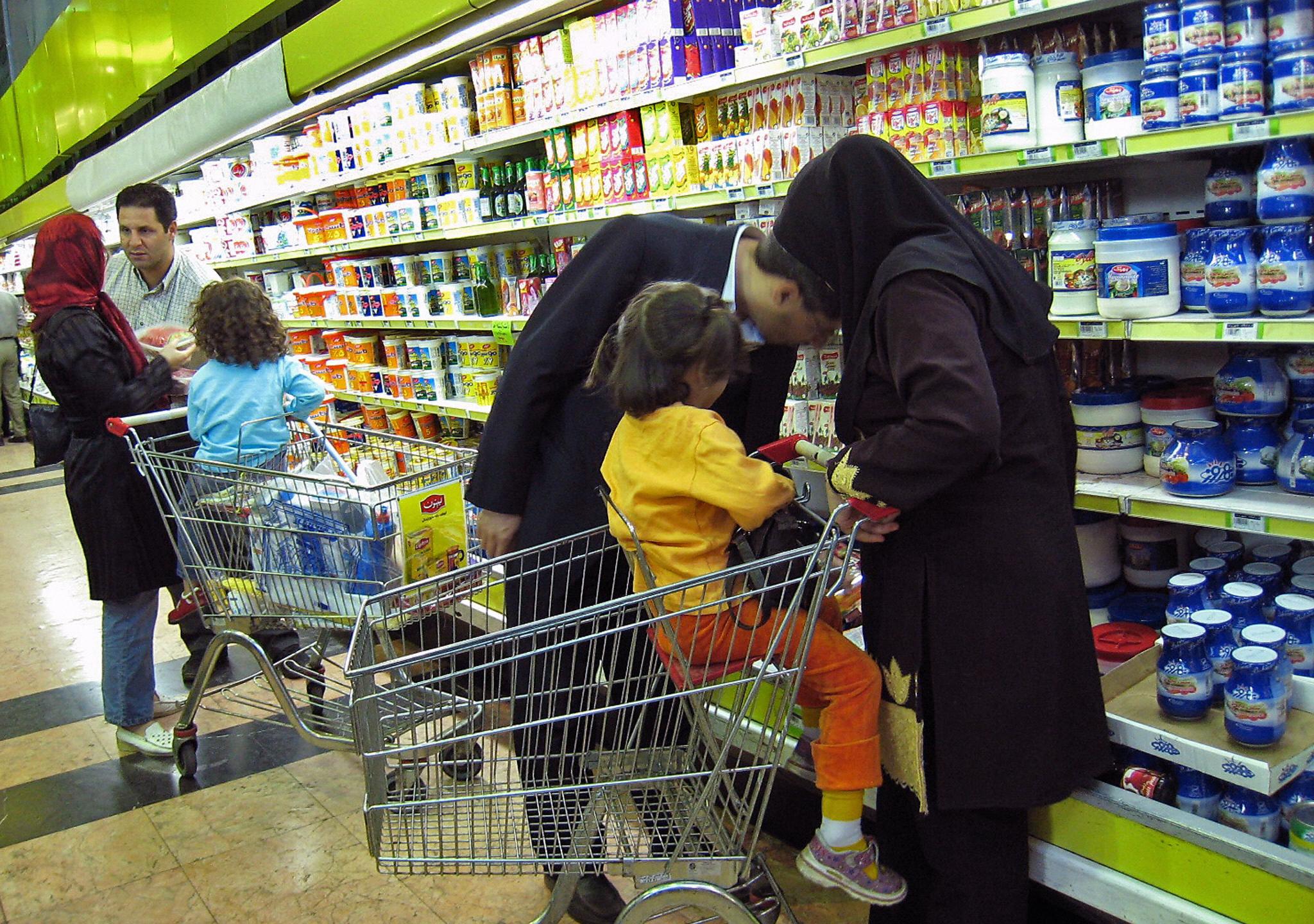
Despite a slowdown in monthly food inflation, rising grocery costs continue to erode Iranian households' purchasing power, with food now consuming nearly three-quarters of the country's minimum wage.
Fresh data released by the Statistical Center of Iran (SCI) show that food prices increased at a slower pace in Tir (June 22–July 22, 2026), offering some temporary relief after months of sharp inflation. However, the moderation has done little to ease pressure on household budgets, as food prices remain significantly higher than a year earlier.
According to calculations based on the Ministry of Cooperatives, Labor and Social Welfare's standard food basket, the monthly cost of essential food items rose by 133% compared with Tir 1404 (June 22–July 22, 2025). More than 74% of Iran's 1405 (March 2026–March 2027) minimum wage is now required simply to purchase basic food for a family.
The figures show that inflation continues to outpace wage growth despite a 60% increase in the minimum wage this year.
Inflation Cools, But Remains Elevated
SCI data show that annual food inflation exceeded 128% in Tir compared with the same month last year.
Among individual products, solid cooking oil recorded the highest annual increase at 399.5%, followed by liquid cooking oil (344.3%), mayonnaise (253.1%) and imported rice (211.3%). Prices of legumes rose more moderately than other food categories.
On a monthly basis, food inflation slowed to 2.5%. Carrots, oranges and potatoes recorded the largest price increases, while prices of chicken, bananas, peaches, eggs, lemons and some legumes declined.
The annual food inflation rate eased by 5.8 percentage points from a year earlier, while monthly food inflation fell by 4.4 percentage points compared with Khordad (May 22–June 21, 2026).
Economists attribute the slowdown mainly to easing geopolitical tensions and the partial reopening of maritime trade routes, which reduced uncertainty and moderated inflation expectations. However, they warn that the improvement is largely temporary and not the result of structural economic changes.
Point-to-point inflation still increased slightly to 83.9%, while services inflation continued to rise due to stronger price rigidity. Analysts say renewed tensions or supply disruptions could quickly revive inflationary pressures. Without controlling liquidity growth and budget deficits, a sustainable decline in inflation remains unlikely.
Policy Shifts Drive Food Prices
Several factors have contributed to the sharp increase in food prices. One major factor was the removal of subsidized foreign currency for essential imports in Dey 1404 (Dec. 22, 2025–Jan. 20, 2026). The government replaced the subsidy with electronic food vouchers, bringing import costs closer to market exchange rates.
The policy led to immediate price increases for cooking oil, rice, livestock feed, poultry and meat, as many agricultural and food-processing inputs rely on imports.
At the same time, currency depreciation increased the cost of imported raw materials, while higher domestic expenses for energy, transportation, packaging, animal feed and labor added further pressure on producers.
Supply chain disruptions linked to tensions around the Strait of Hormuz also limited supply and strengthened inflation expectations.
Economists argue that long-term reliance on subsidies, price controls, preferential exchange rates and import restrictions has reduced the economy’s ability to adapt. Such policies may provide short-term support but can weaken incentives for efficiency, investment and diversification.
Purchasing Power Under Pressure
The impact on household finances has become increasingly severe. According to calculations by Donya-e-Eqtesad newspaper, food accounted for about 59% of the minimum wage in Tir 1404. One year later, that share has climbed to 74.5%, leaving families with limited income for housing, healthcare, transportation, clothing and other expenses.
Housing costs have further intensified pressure. Economist Seyed Hadi Mousavinik has estimated that rent accounted for about 30% of household income in 2005, compared with more than 55% in Tehran today. International standards consider housing costs above 30% of household spending a sign of housing poverty.
Rising housing expenses have forced many families to cut spending on food, while some have moved to smaller homes or cheaper areas. Education spending has also declined, raising concerns about worsening intergenerational poverty.
Mousavinik estimates the poverty line in 1404 (March 2025–March 2026) at around 7 million tomans ($37) per capita per month, rising to about 15 million tomans ($79) for a three-person household and 27 million tomans ($142) in Tehran.
The Majlis Research Center projected that annual per-capita income would reach around 180 million tomans ($947) by 1407 (March 2028–March 2029), with income growth of only 0.3% to 1%. The center also forecast average annual consumer inflation of about 46% under its baseline scenario.
Food Voucher Losing Value
The government's one-million-toman electronic food voucher, introduced in Dey 1404, has also lost purchasing power.
Current estimates show the voucher covers only about 18% of the standard food basket defined by the Welfare Ministry. If adjusted according to food inflation, its value would now need to reach around 1.73 million tomans.
Officials have said the voucher amount will remain unchanged until a sustainable funding source is secured. Retailers have also complained about delays in government reimbursements, which have created cash-flow problems for some participating stores.
Deputy Welfare Minister Yaqoub Andayesh said the program is financed through oil revenues converted into rials by the Central Bank of Iran before being transferred to the Welfare Ministry and then to the company responsible for payments to retailers.