
For decades, Iran's non-oil export basket has been dominated by commodities that travel well but earn little—iron ore, steel pellets, and industrial ingots that leave the country with modest price tags and even slimmer profit margins. That model, according to senior trade officials, is no longer viable.
In a recent policy address to the Iran Guilds Chamber, Mohammad-Ali Dehghan Dehnavi, head of the Trade Promotion Organization of Iran (TPO), laid out a vision for what he called a "strategic transition"—moving the country's export engine away from raw materials and toward finished, high-value goods that can command premium prices in international markets.
The numbers tell a stark story. Iran's average export value per ton currently hovers around $300, while imported goods enter the country at roughly $2,000 per ton—a sevenfold gap that Dehghan Dehnavi described as "structural and problematic." Bridging that divide, he argued, requires not just policy tweaks but a fundamental reorientation of how Iranian producers think about trade.
The Finished-Goods Opportunity
While upstream industries like steel and mining have long been the backbone of non-oil exports, their products lack the branding, design, and service components that drive profitability. By contrast, guild-based manufacturers—producing furniture, footwear, leather goods, clothing, and handicrafts—can achieve export values ranging from $1,000 to several thousand dollars per ton.
"These are the products that can change our currency indicators," Dehghan Dehnavi said, emphasizing that the TPO's primary mission is now to facilitate this shift.
Beyond the Port: Capturing the Retail Premium
The strategy goes beyond simply changing what Iran exports. It also reimagines how Iranian goods reach consumers. Citing the success of East Asian exporters like China and Vietnam, the TPO chief stressed that true market power lies not in shipping containers to destination ports but in controlling the final link of the supply chain—distribution, shelving, and direct-to-consumer retail.
"Successful producers don't stop at the dock," he noted. "They rent store space, secure shelf placement in major chains, and engage directly with the end customer."
For Iranian guilds, the immediate opportunity lies in neighboring markets and the Eurasian Economic Union (EAEU), where a recent free trade agreement has eliminated tariffs on 87% of goods. Leather products, for instance, command several times their domestic price in Armenia, Azerbaijan, and Iraq—yet Iranian share in those markets remains negligible.
Performance-Based Support and Regulatory Reform
To operationalize this vision, the TPO is establishing a dedicated "Guilds Export Desk" to handle union-specific export cases and remove bottlenecks on a case-by-case basis. The organization also plans to sign performance-based memoranda of understanding with individual unions, linking government facilitation to measurable export targets—ranging from millions to hundreds of millions of dollars.
On the regulatory front, Dehghan Dehnavi acknowledged long-standing frustrations over currency repatriation rules. While returning export revenues to Iran's financial system remains a national priority, he said the rules themselves "should not become a barrier for registered exporters." A new service desk, involving specialized trade and currency offices, will allow each union to bring forward three or four problematic cases for targeted resolution.
Handmade Carpets: a Cultural Exception
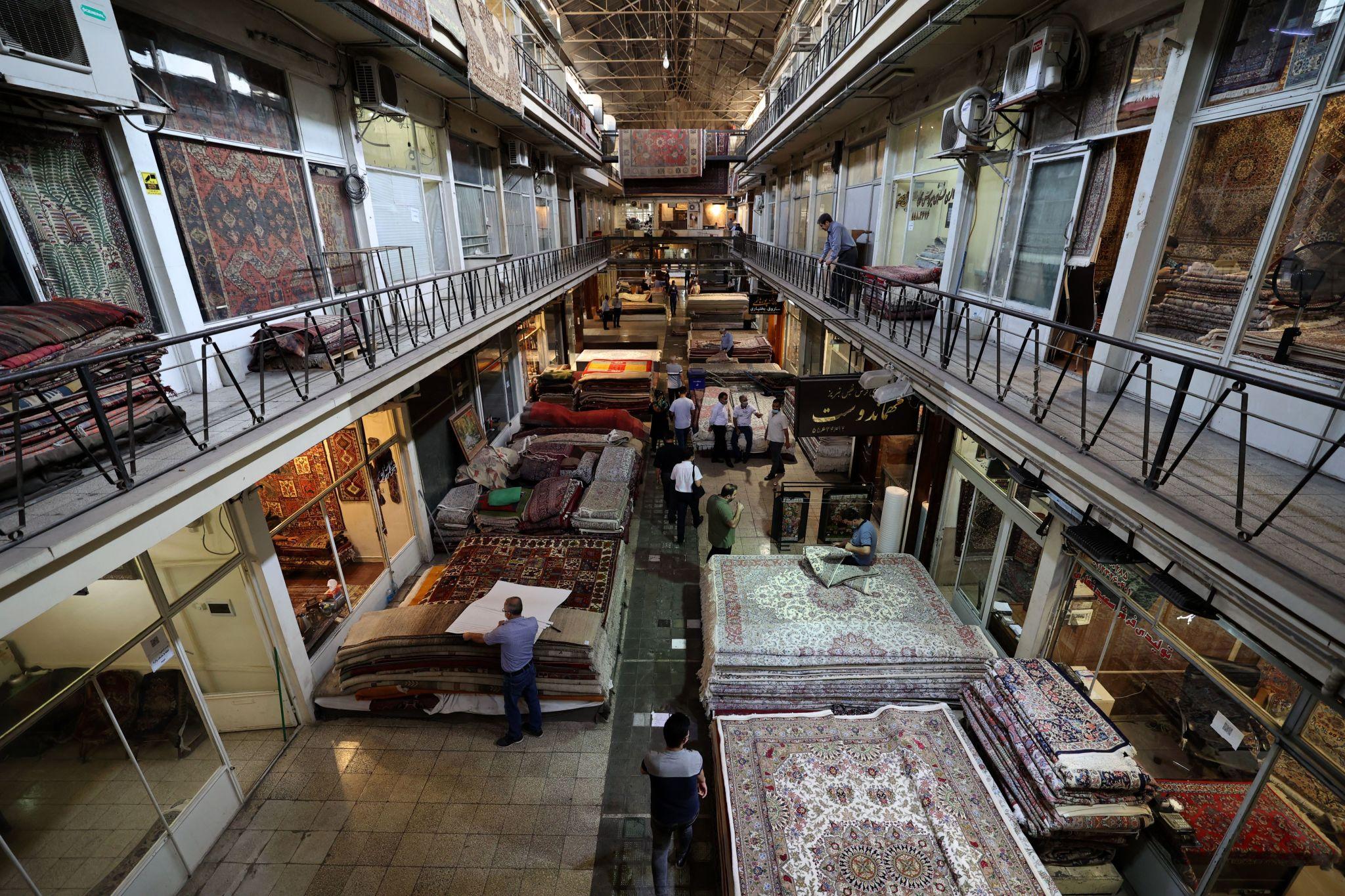
Among the sectors singled out for special attention, handmade carpets occupied a unique position. "They are more than a commodity," Dehghan Dehnavi said. "They are Iran's cultural and artistic flag in international markets."
The TPO is actively pursuing two proposals with the Central Bank and the Cabinet: either a full exemption for handmade carpets from currency repatriation obligations, or at minimum, an extended deadline for returning proceeds—a move officials hope will revive an industry that has long struggled under administrative weight.
A Strategic Pivot With High Stakes
The shift from raw materials to finished goods is not merely an economic calculation—it is a test of institutional will. For an economy long accustomed to exporting its subsoil, the transition to exporting its craftsmanship, design, and industrial sophistication will require new mindsets, new infrastructure, and new forms of international engagement.
Whether Iran can make that leap remains an open question. But for the first time in years, the roadmap is being drawn—and the destination is no longer the mine, but the market.