
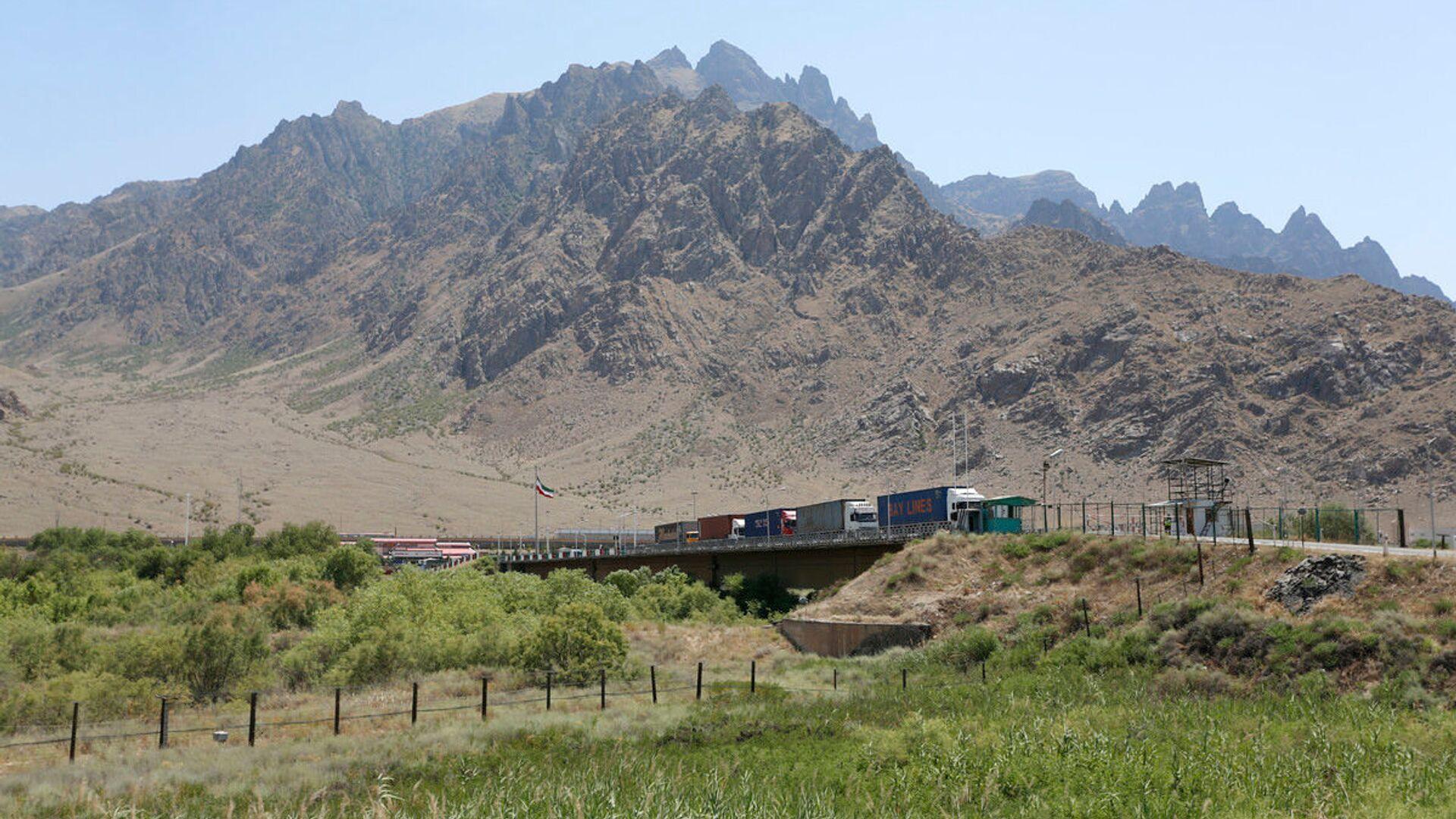
As global supply chains realign and regional connectivity takes center stage, Iran and Armenia are positioning themselves at the heart of a transformative trade corridor. In a recent high-level meeting, officials from both countries laid the groundwork for what could become a vital artery in the region's economic landscape.
The gathering, which brought together Armenia's Deputy Minister of Territorial Administration and Infrastructure and Iran's Head of the Road Maintenance and Transportation Organization, was more than just another diplomatic encounter. It was a signal that both Tehran and Yerevan see transportation not merely as logistics, but as a strategic tool for economic integration and regional influence.
With representatives from Iran's Ministry of Foreign Affairs, the Ministry of Transport and Urban Development, and key transport officials in attendance, the meeting underscored a shared vision: to transform the Iran–Armenia corridor from a mere transit route into a dynamic engine of trade and prosperity.
A Blueprint for Future
At the heart of the discussions was a comprehensive draft memorandum of understanding, painstakingly developed through intensive negotiations at the ministerial level and a dedicated transport meeting hosted in Armenia. Reza Akbari, Iran's Deputy Minister of Transport and Head of the Road Maintenance Organization, described the document as a roadmap for the next phase of bilateral cooperation.
"The draft focuses on infrastructure development, removing border crossing obstacles, reducing or eliminating road tolls, and increasing the capacity to receive transit fleets in both countries," Akbari explained. These are not technical details — they are the building blocks of a more connected, more efficient regional economy.
Perhaps most significantly, Akbari emphasized the strategic importance of parallel corridors and the full activation of the Iran–Armenia–Georgia route. "This corridor can significantly increase trade exchanges and play a decisive role in the regional supply chain," he said, pointing to a future where goods move faster, costs fall, and businesses on both sides benefit.
A Partner's Perspective
Armenian Deputy Minister Galchian, who led his country's delegation, offered a similarly optimistic outlook. He reported tangible progress on infrastructure projects and stressed that the development of transit infrastructure is proceeding on the right track.
"These measures will play an effective role in reducing drivers' problems, facilitating the movement of transit fleets, and improving border logistics," Galchian said. His remarks reflected a growing recognition that practical, on-the-ground improvements — not just high-level agreements — are essential to unlocking the corridor's full potential.
Galchian also revealed that another specialized meeting is planned in the near future, where both sides will delve deeper into the proposed items in the memorandum and explore operational solutions for expanding bilateral cooperation. The outcomes, he noted, will be announced through diplomatic channels.
Beyond Bilateralism: A Regional Vision
Behind the technical language of tolls and transit capacities lies a broader strategic ambition. Seyed Hossein Hosseini, Acting Director of the Transit and International Transport Office, framed the discussions within Iran's larger policy of developing strategic relations with neighbors and positioning itself as a regional transit hub.
"These dialogues demonstrate the determination of the two countries to overcome traditional obstacles and move toward sustainable economic convergence," Hosseini said. In an era of shifting trade patterns and renewed interest in overland routes, the Iran–Armenia corridor is emerging as a key piece of a much larger puzzle — one that connects the Persian Gulf to the Black Sea and beyond.
A Shared Horizon
For Iran and Armenia, this is more than a transport agreement.
It is a statement of intent — a recognition that geography, when paired with political will and investment, can become a source of shared prosperity. As both countries move toward finalizing their memorandum and implementing tangible projects, the corridor they are building together may well become a model for regional cooperation in a time of global uncertainty.
The road ahead is not without challenges. Border procedures, infrastructure gaps, and financing remain obstacles. But if the determination expressed in this meeting translates into action, the Iran–Armenia corridor could indeed become the trade engine both countries envision — and a beacon of what is possible when neighbors choose collaboration over isolation.