
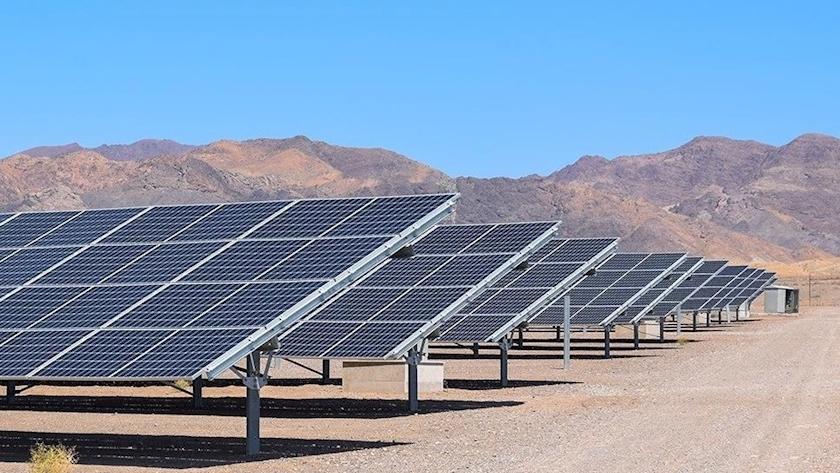
The Deputy Minister of Energy and Head of the Renewable Energy and Energy Efficiency Organization (SATBA) stated that the capacity of the country's renewable power plants will reach 12,000 megawatts by the end of the current Iranian calendar year (March 20, 2027) with the continuation of development projects.
According to IRNA, Mohsen Tarztalab, during a visit to solar power plants in western Golestan province, stated that since the beginning of the 14th government's term, approximately 4,500 megawatts of new capacity have been added to the country's power grid, and the capacity of renewable power plants has increased from 1,250 megawatts to about 5,800 megawatts.
He added: "Based on the planning carried out, the capacity of renewable power plants will reach 7,000 megawatts by the end of the first half of the present Iranian year (September 22) and 12,000 megawatts by the end of the year. Achieving this goal requires securing the necessary financial resources."
The Head of SATBA, referring to the implementation process of solar projects in Golestan, said: "A private sector solar power plant in Gonbad Kavus county is in its final stages of construction, and part of its capacity will be connected to the national power grid within the next 20 days, with the full capacity of the plant to be connected by September 10."
About 140 people are working on this project, and efforts are being made to bring the plant fully online within a maximum of one and a half months.
He identified the development of household solar power plants as one of the government's priorities and added: "Financial resource limitations have reduced the possibility of simultaneously granting facilities to all applicants, but SATBA, by establishing a project fund and utilizing its resources, is pursuing the provision of low-interest facilities for the development of these plants."
The Deputy Minister of Energy said: "Applicants who have the necessary permits, contracts, grid connection approvals, and appropriate physical progress will be introduced to banks to receive facilities, so that greater public participation in the development of solar power plants can be facilitated."
Tarztalab, during the visit to the solar power plants in western Golestan, also evaluated the implementation process of the province's 3, 30, and 64-megawatt projects as favorable and said: "With the operation of these projects, the share of clean energy in Golestan's electricity supply will increase, and part of the province's consumption needs will be met through solar power generation."