
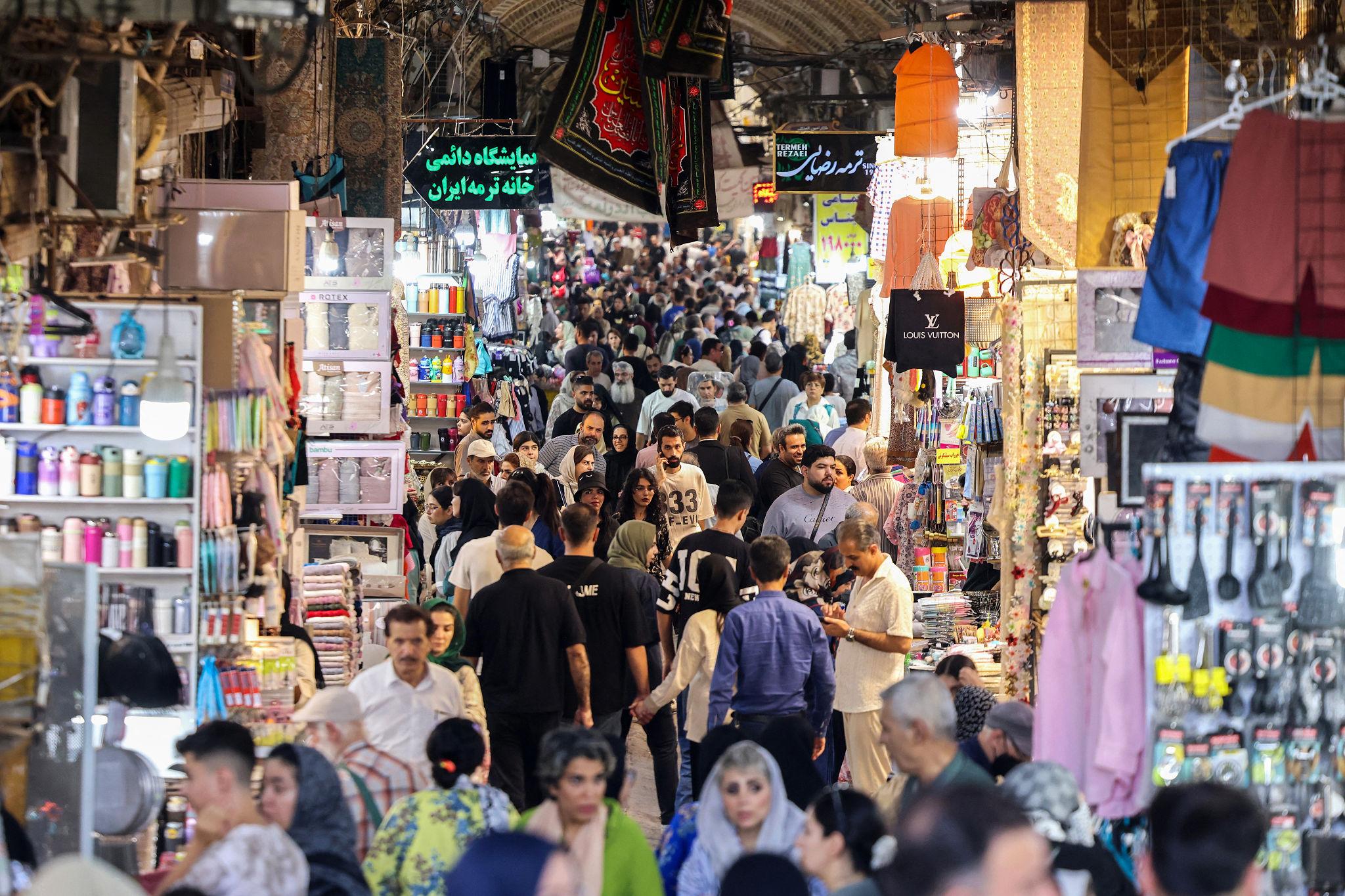
Inflation has once again become Iran's most pressing economic challenge, placing the Central Bank of Iran (CBI) under mounting pressure to restore price stability. Fresh data show annual inflation has climbed above 60%, while point-to-point inflation is approaching 90%, underscoring the urgency of containing rising prices. Economists broadly agree that inflation control must remain the country's top economic priority, but they differ over which policy tools are capable of delivering lasting results.
The CBI has relied on a combination of monetary tightening measures, including higher reserve requirements, restrictions on banks' balance sheet expansion and tighter supervision of bank overdrafts. These policies are designed to curb liquidity growth and stabilize inflation expectations. At the same time, policymakers have stressed the importance of maintaining relative stability in the foreign exchange market, as exchange rate volatility quickly feeds into production costs, imports and consumer prices.
Monetary Tools
Like most central banks, the CBI views price stability as its primary mandate. Higher reserve requirements reduce banks' lending capacity by forcing them to keep a larger share of deposits at the central bank, slowing credit creation and money supply growth. Meanwhile, limits on balance sheet expansion seek to prevent excessive lending that could fuel inflation, while tighter control over bank overdrafts aims to restrain growth in the monetary base.
Economists say these measures can strengthen monetary discipline, but few believe they are sufficient on their own.
Banking expert Hamid Tehranfar argues that reserve requirements, balance sheet controls and limits on bank overdrafts "may have short-term effects, but they are not powerful enough to deliver lasting inflation control."
Instead, he believes the most effective but underused policy instrument is interest rates.
"When inflation exceeds 60%, keeping deposit rates around 23% results in deeply negative real interest rates," Tehranfar said. "Depositors steadily lose purchasing power, encouraging them to move their savings into foreign currency, gold, housing and other speculative assets."
He argues that gradually raising deposit rates above inflation would encourage households to keep savings in the banking system, reduce speculative demand and strengthen monetary policy. Tehranfar also rejects concerns that higher borrowing costs would seriously undermine production, saying businesses operating in a high-inflation environment generally adjust prices to offset higher financing expenses.
Beyond the CBI
Others believe the roots of inflation lie outside the reach of monetary policy.
Speaking at the Iran Economy Outlook 1405 conference organized by Donya-e-Eqtesad, Hamid Zamanzadeh, acting head of macroeconomic affairs at the Plan and Budget Organization, argued that sanctions, war-related disruptions and restrictions on Iran's foreign economic relations remain the principal drivers of inflation.
"Exchange-rate constraints and declining imports have reduced the supply of goods, especially widely consumed products, pushing prices even higher," he said.
Although fiscal deficits and liquidity growth contribute to inflation, Zamanzadeh said the exchange rate remains the main channel through which sanctions affect the broader economy. In his view, no domestic policy alone can fully offset external pressures.
"If current conditions persist, Iran will likely continue to experience weak growth and high inflation," he said. "A comprehensive agreement that improves foreign relations could pave the way for stronger growth and inflation below 20% in the coming years."
CBI Governor Abdolnaser Hemmati has likewise identified inflation control as the institution's highest priority. According to the central bank, he recently said that strengthening financial discipline, preventing uncontrolled liquidity creation and addressing structural weaknesses in the banking sector form the foundation of the CBI's new monetary strategy.
"Our primary objective is to control inflation and inflation expectations while avoiding recession and negative economic growth," Hemmati said.
Despite differing views on the relative importance of monetary tools and external factors, economists agree on one point: sustainable price stability will require a combination of disciplined monetary policy, fiscal reforms, healthier banks, exchange-rate stability and an improved external environment. Without coordinated action across these fronts, inflation is likely to remain Iran's most persistent economic challenge.