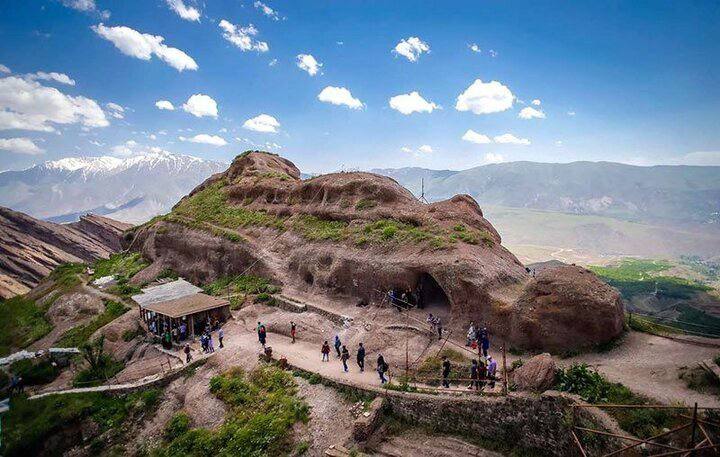
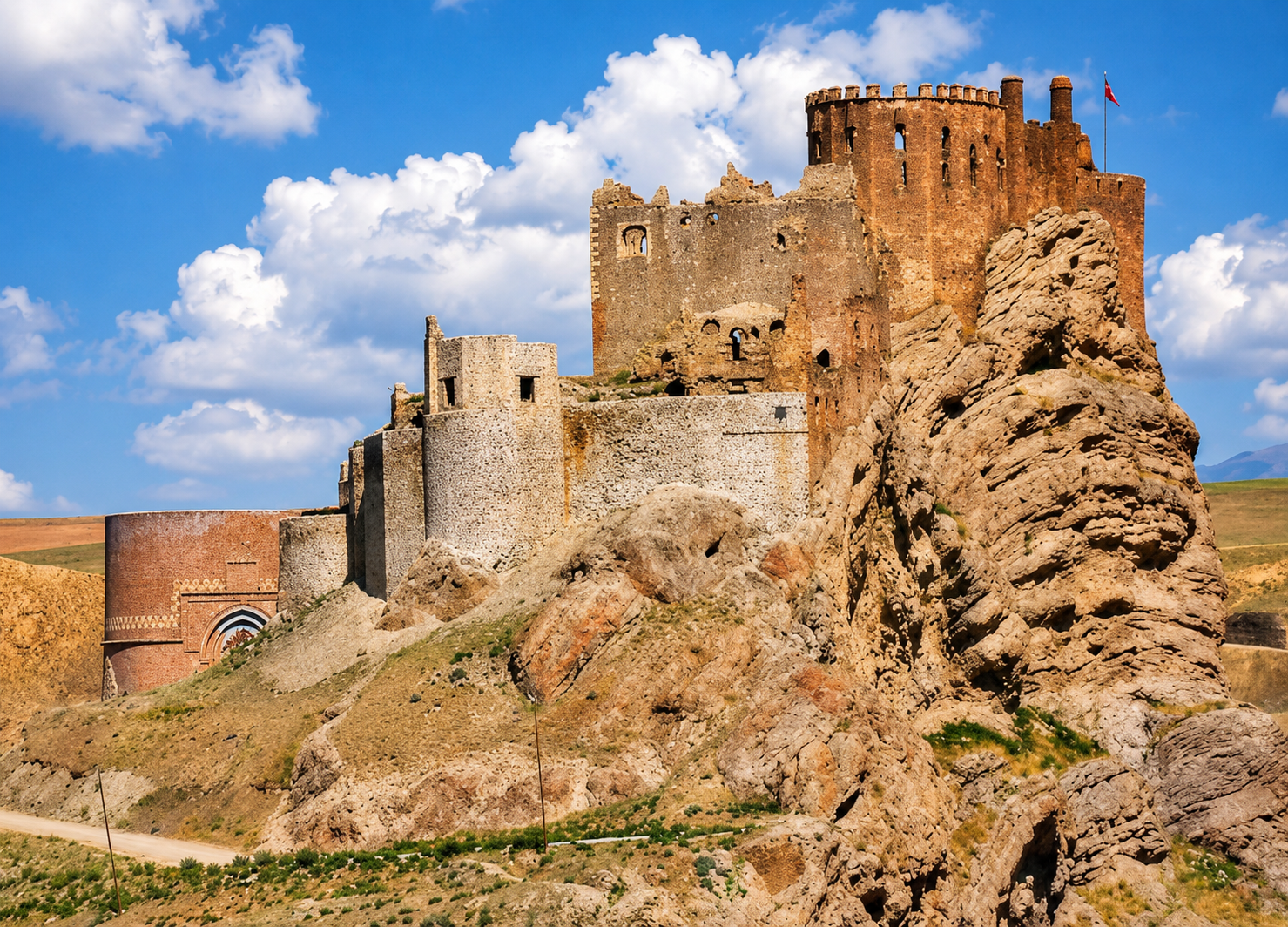
In a historic session held in Busan, South Korea, the UNESCO World Heritage Committee officially inscribed the “Alamut Castle and Related Fortifications” on its prestigious World Heritage List.
The decision, adopted on Sunday during the 48th session of the committee, marks a crowning achievement for Iran’s cultural heritage sector, securing the country’s 30th tangible cultural property on the international register.
The serial nomination, comprising seven formidable castles and defensive structures scattered across the eastern and western valleys of Alamut and the southern slopes of the Alborz mountain range in Qazvin province, represents far more than a collection of ancient ruins; it embodies a sophisticated medieval administrative and defensive network that flourished between the 11th and 13th centuries.
As experts and officials celebrate this international recognition, a comprehensive roadmap for post-registration management, sustainable tourism, and enhanced scientific collaboration is already taking shape.
A Landmark Achievement in Busan
The atmosphere at the Busan session was charged with pride as the final votes were cast. Following the announcement, Iran’s Minister of Cultural Heritage, Tourism, and Handicrafts, Seyyed Reza Salehi-Amiri, delivered an impassioned address, dedicating the success to the resilient and culturally rich nation of Iran, the civilization-building people of Qazvin province, and especially the residents of the Alamut district—whom he described as the “true owners and guardians of this valuable heritage.”
Extending his gratitude beyond Iran’s borders, Salehi-Amiri thanked the members of the World Heritage Committee, the UNESCO World Heritage Centre, and ICOMOS for their professional rigour in safeguarding humanity's collective legacy.
He also offered sincere appreciation to the government and people of the Republic of Korea for their warm hospitality and excellent organization of the session.
Emphasizing the universal philosophy underpinning the 1972 World Heritage Convention, the Minister reiterated that the protection of global heritage is only achievable through peace, security, mutual respect, and constructive dialogue among nations. In a moment meant to resonate with the international audience, he underscored Iran’s profound civilizational depth: “With over seven thousand years of civilization, Iran possesses more than one million historical sites, 43,000 nationally registered sites, and 30 world-registered sites.”
He added, “Alamut is one of the cradles of civilization and identity of Greater Iran,” framing the registration as the consolidation of Iran's standing in thought, historical memory, and cultural capacity within the global heritage system.
A Network of Seven Fortresses Across Alborz
The newly inscribed serial property is notable for its integrated landscape approach. Rather than a single isolated fortress, the UNESCO designation covers seven distinct castles: Alamut Castle, Lambsar, Navizarshah, Shams-Kelaye, Qostinlar, Shirkuh, and Ilan. These fortifications are not merely scattered ruins; they form an interconnected defensive and administrative system that operated cohesively during the medieval period.
According to Mohammad-Hassan Talebian, manager of the UNESCO nomination dossier, the broader defensive landscape extends across approximately 2,000 square kilometers, encompassing villages, agricultural lands, and complex water-management systems.
From the late 11th century CE, Alamut served as the political, military, and intellectual heart of the Nizari Ismaili state, a significant Islamic movement whose influence stretched across Iran and much of the Islamic world. The network provided refuge for the Nizari community while serving as a hub for scientific and intellectual pursuits.
Among the prominent scholars associated with the site was the legendary Khajeh Nasir al-Din al-Tusi, whose presence, along with the fortress’s substantial library, underscores its role as a leading academic center of its time.
Veteran cultural heritage expert Seyyed Mohammad Beheshti noted that the fortifications fill a crucial gap in understanding the evolution of Iranian architecture and military organization. He pointed out that while many Seljuk and pre-Seljuk structures have not survived intact, Alamut provides exceptionally valuable archaeological evidence of medieval construction techniques.
The history of the site took a dramatic turn in 1256 when the Mongol ruler Hulagu Khan captured the fortifications, bringing an end to the Nizari Ismaili state. Though interest in the site waned for centuries, it was famously revived in the 20th century following the publication of British travel writer Freya Stark’s account, Valleys of the Assassins.
Twenty-Five Years of Archaeological Endeavor
The path to this global recognition was neither swift nor easy. Hamideh Chubak, the manager of the Alamut World Heritage base and former head of the Archaeology Research Institute, revealed that the registration is the direct result of over 25 years of relentless research, conservation, and continuous management.
Speaking to Miras Aria, she emphasized that the preparation of the comprehensive dossier began as early as 2001. However, the initial conditions were daunting. Before the project commenced, the site of Alamut Castle was little more than a heavily eroded earthen mound, with only fragmented sections of its walls visible due to years of abandonment and harsh weather.
“Without research, scientific protection of cultural heritage is not possible,” Chubak stated. Her team conducted 16 seasons of archaeological excavations over the past two-and-a-half decades. Crucially, the excavations adopted a "conservation-oriented" approach, meaning every section was immediately covered by protective measures as soon as it was unearthed. The restoration process utilized authentic historical materials, including traditional semi-crushed gypsum plaster, a technique that received high praise from UNESCO evaluators.
Chubak highlighted that the dossier's strength lies in its interdisciplinary approach, extending beyond the castles to include historical villages, Imamzadehs (shrines), and cultural artifacts. She pointed out that the site’s significance is not merely military; it was equally a center of governance, culture, and science. While celebrating the registration, she stressed that this is “not the end of a path, but rather the beginning of a new phase for protection, introduction, and sustainable development.”
Charting a Sustainable Future: The Management Plan
With the euphoria of the UNESCO listing comes the heavy responsibility of managing a world-renowned heritage site. Alireza Izadi, Director General of the National Office for Registration of Historical Sites, outlined the immediate and long-term challenges ahead. He confirmed that the recognition necessitates a comprehensive "Management Plan" that balances tourism development with strict conservation. The primary concern is preventing the formation of mass tourism, as the mountainous terrain of Alamut lacks the physical capacity to accommodate large crowds.
"We must plan for tourism, infrastructure, and control," Izadi explained, noting that ICOMOS has long emphasized sustainable visitation models. He confirmed that initial ground works, such as appropriate paving and pathways, have already been implemented.
Furthermore, he addressed public criticism regarding the protection of Iran's registered sites, citing the monitoring mechanisms of the World Heritage Committee. He used the example of Bam Citadel, which was placed on the List of World Heritage in Danger after the 2003 earthquake but successfully rehabilitated through Iran's dedicated efforts.
He also recalled how UNESCO's monitoring prompted the reduction of two floors of the Arg-e Jahan-nama building near Naqsh-e Jahan Square in Isfahan to protect the site’s visual integrity. “All sites are continuously monitored,” Izadi assured, adding that despite budget constraints, UNESCO and ICOMOS evaluations have not found critical faults in the management of Iran’s registered properties.
Maryam Mahdavi, the head of Qazvin's cultural heritage department, echoed this sentiment, emphasizing that the registration has doubled the responsibility of protecting the historical complex. She stressed that this is a golden opportunity to boost cultural tourism and strengthen the local economy, but it requires synergy between civil society, the government, and the local population.
She credited the active participation of residents and cultural enthusiasts as a decisive factor in compiling the coherent dossier that ultimately convinced the committee.
A monumental achievement in Busan crowns 25 years of archaeological dedication and signals a new era for cultural preservation.