
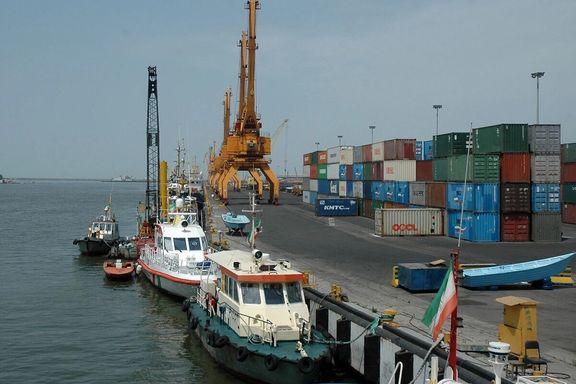
In the northern reaches of Iran, where the Caspian Sea meets the shores of Gilan province, a quiet transformation is underway. The Caspian Port, once a controversial project that faced years of opposition, is now proving its worth as a vital component of Iran's trade infrastructure.
The numbers tell a compelling story. According to Mostafa Ta'ati-Moghaddam, CEO of the Anzali Free Zone Organization, cargo handling at the port has grown by an impressive 58%, rising from 760,000 tons in the Iranian year 1403 (ended on March 20, 2025) to 1.2 million tons in 1404. This year alone has seen a 35% increase compared to the same period last year.
These figures are more than just statistics. They represent a strategic shift in how Iran is diversifying its trade routes—a move that has taken on new urgency in light of recent disruptions in the south.
A Vision That Overcame Opposition
The Caspian Port's journey to operational success was anything but smooth. When the idea was first proposed in the early 2000s, it faced considerable resistance. Some saw it as a threat to existing ports on the Caspian Sea. But a group of forward-thinking experts recognized a fundamental truth: Iran needed a modern, internationally standardized port on its northern shores.
"Before the Caspian Port, Anzali and Nowshahr were the main traditional ports in the north," Ta'ati-Moghaddam explained. "The Caspian Port was designed with new standards and has greater capacity for operational expansion."
Today, that vision is being realized. The port is not just operational—it is thriving.
Stepping Up When It Matters Most
Perhaps the most telling testament to the port's importance has been its performance during challenging times. With southern ports facing restrictions due to U.S. naval blockades, the Caspian Port has emerged as a reliable alternative route for essential goods.
Since March 2026, nearly 110,000 tons of essential commodities have entered the country through this northern gateway. To manage this growing volume, the port authority has signed an agreement to activate the previously dormant Pier No. 1 for direct cargo handling, accelerating the movement of goods and reducing warehousing costs.
In the liquid bulk sector, over 75,000 tons of vegetable oil have been imported through the Caspian Port to date, with more than 100,000 tons arriving last year alone.
Building the Complete Logistics Chain
Ta'ati-Moghaddam emphasized that the port's development must be seen as part of an integrated logistics chain—one that includes piers, warehouses, rail and road networks, handling equipment, and a modern fleet.
One of the most exciting developments on the horizon is the completion of the Caspian Port's railway connection. When the port first opened, it lacked a train station—the nearest being 15 kilometers away. Now, plans are underway to integrate a shunting yard with the main station, and two additional kilometers of track have already been completed even during recent challenges.
"The internal railway lines of the Caspian Port are expected to become operational this year," the CEO announced. "Once completed, we will no longer face serious concerns about cargo transport, especially when road fleets are constrained."
A Complement, Not a Competitor
Addressing the relationship between northern and southern ports, Ta'ati-Moghaddam emphasized that the Caspian Port is not intended to replace Iran's southern gateways, but rather to complement them.
"It's not about complete replacement," he clarified. "The Caspian Port can serve as a complementary and strategic route, covering a portion of the country's cargo—especially essential goods, grains, oil, transit cargo, and trade with Russia and Caspian Sea states."
This approach reflects a sophisticated understanding of Iran's diverse geography and trade needs. Each route has its strengths, and together they form a resilient network.
Looking to the Future: International Corridors
The official also highlighted the port's potential role in activating international transport corridors—a goal that requires not just infrastructure, but active economic diplomacy.
"If the economy stabilizes, the Caspian Port can become a highly effective container transport route," Ta'ati-Moghaddam said. "With its rail connection, cargo could even be sent onward to India."
The port's current container volume is already unprecedented among Iran's northern ports, with Piers No. 1 and 2 now operating at near-full capacity. Looking further ahead, the Caspian Port could play a significant role in rail transport of goods to Iraq, supplying essential commodities from Kazakhstan and Russia.
A Gateway to Resilience
The Caspian Port represents more than just a piece of infrastructure. It is a symbol of Iran's ability to adapt, innovate, and build for the future. As Ta'ati-Moghaddam concluded, "Many of these routes, if prioritized in the Roads Ministry's programs, could play a crucial role in Iran's rail and maritime transport. Iran could then become a key supplier for neighboring countries."
The port's journey from controversial idea to operational success is a testament to what strategic planning and determined execution can achieve. As southern routes face continued pressure, Iran's northern gateway stands ready to support the country's trade resilience.
The Caspian Port's story is still being written—and the chapters ahead promise to be even more impressive.