
For decades, gasoline prices have been among the most politically sensitive issues in Iran. Heavy fuel subsidies have helped keep domestic prices far below international levels, but they have also encouraged rising consumption, strained government finances and distorted energy markets. Policymakers have long debated whether higher prices could reduce demand and ease fiscal pressures. A new report by Iran's Plan and Budget Organization, however, argues that fuel price hikes alone cannot solve the country's consumption problem.
The comprehensive study concludes that simply increasing the nominal price of gasoline is unlikely to produce a meaningful decline in fuel consumption. In an economy characterized by persistent inflation, much of the intended impact of higher fuel prices is quickly eroded as overall prices rise. According to the report, successful gasoline reform requires a broader package combining inflation control, targeted support for low-income households, expanded public transportation and complementary non-price policies.
The findings are particularly significant because Iran remains one of the world's largest providers of energy subsidies. Unlike many developed economies, where fuel prices are largely market-based and governments rely on fuel taxes to address environmental and congestion costs, Iran continues to regulate gasoline prices while absorbing substantial subsidy costs. Officials increasingly argue that reform has become necessary to improve fiscal sustainability while reducing inefficient energy consumption.
The report draws on household expenditure surveys covering 2016-2025 and long-term macroeconomic data dating back to 1988, making it one of the most comprehensive recent analyses of gasoline pricing in Iran.
Limited Impact
One of its central findings is that gasoline demand is highly price inelastic. Following the major fuel price increase in November 2019, the estimated price elasticity of demand stood at around negative 0.37. In practical terms, this means a 10% increase in gasoline prices reduces consumption by only about 3.7%.
The report also estimates gasoline's income elasticity at roughly 0.44, confirming that fuel remains a necessity rather than a discretionary purchase for most urban households. Car ownership, family size and employment patterns appear to influence gasoline consumption far more than price alone.
Scenario analysis reinforces this conclusion. If gasoline prices rise while the consumer price index remains unchanged, fuel consumption could decline by between 3.7% and 6.3%. However, once inflation is incorporated into the calculations, the expected reduction falls sharply to just 0.8%-3.4%.
The implication is straightforward. Inflation rapidly offsets much of the impact of nominal price increases by reducing changes in real gasoline prices. As a result, pricing policies become significantly less effective in managing demand unless accompanied by broader macroeconomic stability.
The report also highlights the social consequences of fuel price reform. Using a true cost-of-living index, researchers estimate that raising gasoline prices to 5,000 tomans per liter would increase household living costs by approximately 3.4%. Under a more aggressive scenario of 15,000 tomans per liter, living costs would rise by nearly 12.5%.
The burden, however, would not be distributed evenly. Although wealthier households would experience larger absolute financial losses because they consume more fuel, lower-income families would face much greater relative welfare pressures. In the highest-price scenario, the cost-of-living index for the poorest income decile would rise by more than 16%, compared with less than 9% for the richest households.
The study estimates that fully compensating households for a gasoline price of 10,000 tomans per liter would require monthly government transfers averaging nearly 1.79 million tomans (about $10) per household, highlighting the fiscal challenges of broad compensation programs.
Beyond Pricing
Beyond households, the report questions whether higher gasoline prices alone can significantly improve public finances.
Although price increases raise the government's nominal revenues, the study concludes that Iran's fuel budget remains heavily influenced by inflation and exchange-rate movements. Researchers argue that fluctuations in the exchange rate have a greater impact on the government's gasoline balance than domestic price adjustments themselves. Even substantial fuel price increases can quickly lose their fiscal benefits if inflation accelerates or the national currency weakens.
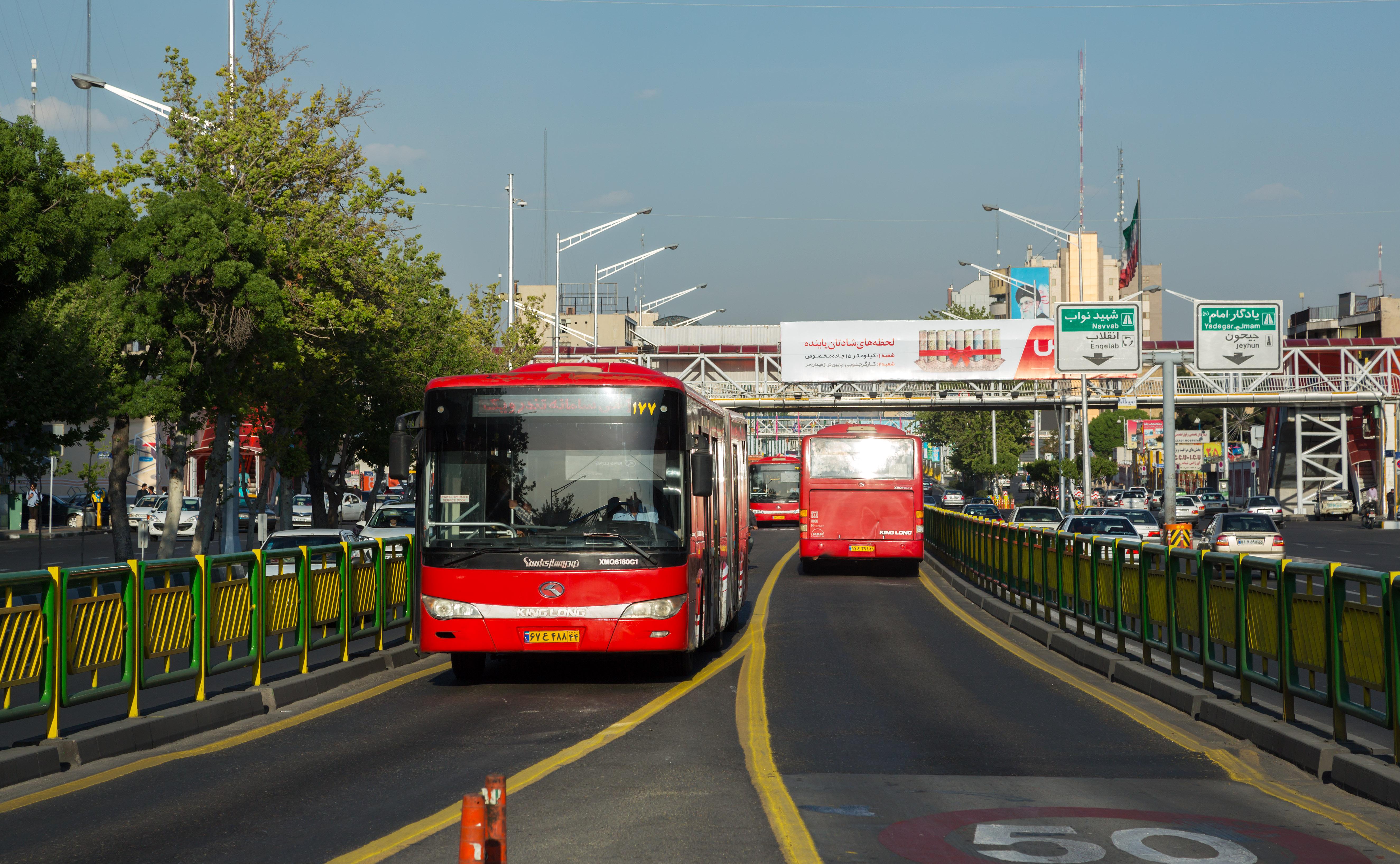
For that reason, the report argues that fuel pricing should be viewed as only one element of a broader reform strategy. It recommends expanding public transportation, modernizing vehicle fleets, improving energy efficiency, gradually reforming the fuel quota system and creating incentives to reduce reliance on private cars. It also stresses that additional revenues from gasoline reform should be managed transparently and directed toward public transport projects and targeted support for vulnerable households.
Ultimately, the report concludes that sustainable fuel reform depends less on larger price increases than on preserving their real value through lower inflation while strengthening social protection, transportation infrastructure and macroeconomic stability.