
Iran’s reconstruction efforts could become much more than a program to repair damaged infrastructure. Experts argue that the rebuilding process offers a rare opportunity to address some of the country’s most persistent economic challenges, particularly chronic energy imbalances, low productivity and infrastructure vulnerability.
The central question facing policymakers is not simply how to replace what has been lost, but whether reconstruction can help create a more efficient and resilient economy.
According to sustainable development researcher Farshid Adavi, countries that have emerged stronger from crises have typically used reconstruction as a catalyst for structural reform rather than merely restoring previous conditions. He argues that successful rebuilding should improve economic performance, resource efficiency and resilience instead of reproducing old weaknesses.
“The main question is not how to rebuild what has been lost,” Adavi says. “The question is how to build a future that is better than the past.”
Build Back Better
This idea is reflected in the widely adopted “Build Back Better” approach, which has become a guiding principle in modern reconstruction strategies around the world. Under this framework, rebuilding is viewed as an opportunity to upgrade infrastructure, strengthen economic systems and increase resilience against future shocks.
For Iran, one of the most important opportunities lies in the energy sector. Energy imbalances have become a recurring challenge for the Iranian economy. Periodic electricity shortages, rising demand and inefficient consumption patterns have imposed growing costs on households and businesses. Reconstruction spending could provide an opportunity to address these problems through investments in efficiency and modernization.
Adavi notes that the building sector alone accounts for around 40% of the country’s energy consumption. As new buildings, housing projects and public facilities are constructed, policymakers have an opportunity to introduce higher efficiency standards and modern technologies that reduce long-term energy demand.
The same logic applies to industry. Many Iranian factories continue to operate with outdated technologies and relatively high energy intensity, reducing competitiveness and increasing production costs. Rebuilding and modernization programs could help improve productivity while lowering energy consumption.
Agriculture also presents significant opportunities. Water scarcity has become one of Iran’s most pressing environmental and economic challenges. Investments in modern irrigation systems, smart technologies and more efficient production methods could strengthen both agricultural productivity and resource management.
While improving efficiency is essential, reconstruction also offers an opportunity to strengthen energy security.
Strategic Asset
Ali Kortalaei, an economic researcher and renewable energy industry activist, argues that modern national security increasingly depends on the resilience of critical infrastructure. In this context, electricity networks have become one of the most important strategic assets.
According to Kortalaei, traditional power systems built around a limited number of large power plants have become increasingly vulnerable to military attacks, cyber threats and other disruptions.
“Large and centralized power plants have become the Achilles’ heel of our security,” he maintains.
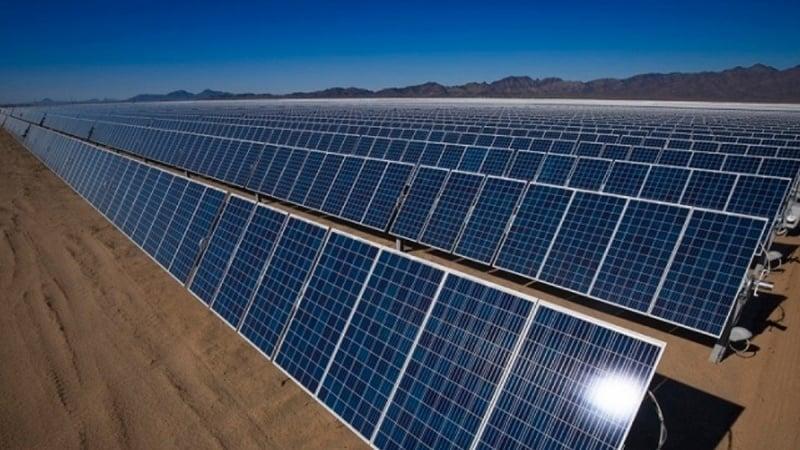
The solution, he argues, lies in decentralizing electricity generation through renewable energy, particularly solar power. Instead of relying on a handful of large facilities, electricity could be produced through thousands of distributed solar installations located across cities, industrial zones and residential areas.
Such a system would improve resilience because disruptions at one location would not necessarily affect the entire network. The costs of disabling a distributed system would also be significantly higher for any potential attacker.
Kortalaei describes distributed solar generation as a model that can transform the power network “from a fragile spider web into an intelligent and distributed neural network.”
Solar systems combined with battery storage and smart-grid technologies could also continue supplying electricity to local communities even if parts of the national grid were disrupted. Hospitals, communication facilities and other essential services would therefore be better protected during emergencies.
The broader lesson from the two experts’ views is that reconstruction should not be viewed solely as a construction program. It can also serve as a platform for improving productivity, modernizing infrastructure and strengthening economic resilience.
If rebuilding efforts focus on energy efficiency, renewable energy, modern technologies and resource productivity, reconstruction could help reduce some of Iran’s most persistent economic imbalances. In that scenario, the country would not simply recover from damage. It would emerge with a stronger foundation for long-term growth and sustainable development.