
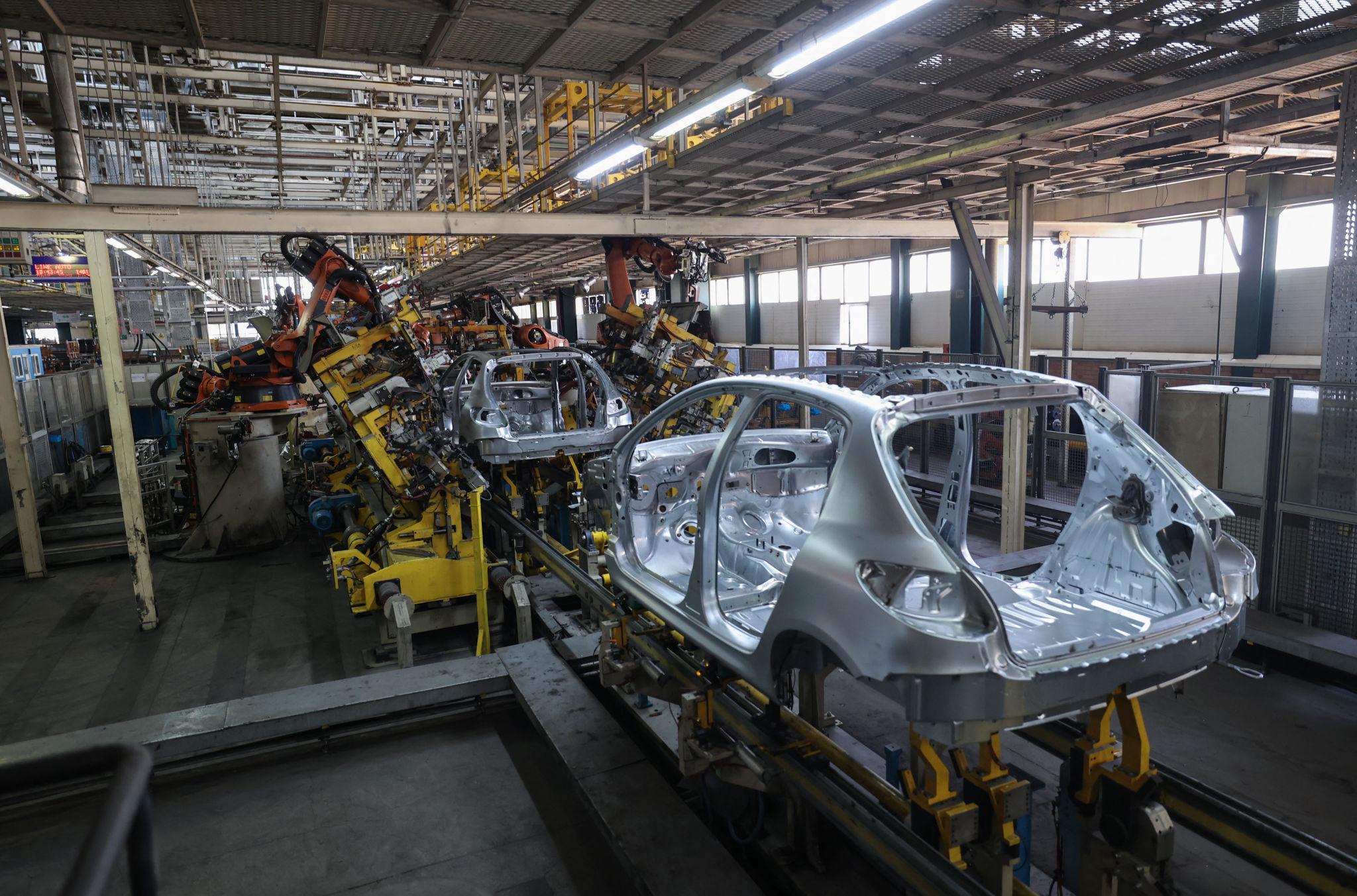
Iran’s automotive industry is once again looking to diplomacy as Tehran and Washington move closer to a possible comprehensive agreement following months of tensions and conflict. A temporary memorandum of understanding between the two sides has revived hopes that the sector could experience a recovery similar to the one seen after the 2015 nuclear agreement.
Under the reported framework, the US has agreed to refrain from imposing new sanctions for a 60-day period while negotiations continue. If a final agreement is reached, US primary and secondary sanctions, European restrictions and United Nations Security Council sanctions could eventually be lifted. Although the final details remain uncertain, the experience of the 2015 nuclear deal suggests that easing international restrictions can have a profound impact on Iran’s automotive sector.
Few industries in Iran have been as directly affected by sanctions as automobile manufacturing. The sector has long depended on international supply chains, access to foreign technology, financial channels and partnerships with global automakers. As a result, shifts in Iran’s international relations have often been reflected almost immediately in production figures.
The industry entered one of its most difficult periods after Western sanctions directly targeted Iran’s automotive sector in 1391 (March 2012-March 2013). Foreign partners withdrew from the market, access to components became increasingly difficult and production volumes fell sharply. Passenger vehicle output dropped to some of the lowest levels recorded in the early years of the decade.
Turning Point
A turning point came in 1394 (March 2015-March 2016), when the nuclear agreement was implemented and many international restrictions were lifted. The deal reopened channels of cooperation between Iranian automakers and foreign companies. European manufacturers that had previously left Iran returned to negotiations, and several joint ventures were launched.
The benefits extended beyond political symbolism. Iranian automakers gained improved access to financial resources, banking channels, components and production technology. Supply chains became more stable and procurement costs declined as companies were once again able to use formal international channels.
The impact was clearly visible in production statistics. Passenger vehicle production recovered rapidly and eventually exceeded 1.4 million units, one of the highest levels recorded in the past two decades. The industry’s recovery demonstrated how quickly output could increase when external constraints were eased.
The post-agreement period also brought renewed expectations regarding technology transfer and product development. Cooperation agreements with French automakers and discussions with other international brands created optimism that domestic manufacturing quality could improve and that localization efforts could advance alongside foreign investment.
However, this momentum proved short-lived. Following the US withdrawal from the nuclear agreement in 1397 (March 2018-March 2019) and the reimposition of sanctions, many foreign companies suspended their operations in Iran. Financial channels narrowed once again, access to components became more difficult and planned investments were postponed or canceled.
The consequences soon appeared in production data. Within a year of sanctions returning, passenger vehicle output fell to slightly above 600,000 units. An industry that had been approaching historic production records lost a significant portion of its manufacturing capacity in a relatively short period.
The decline was not limited to production volumes. Joint projects were halted, several newer products disappeared from assembly lines and manufacturers increasingly relied on older platforms and technologies to maintain production. Component procurement became more expensive and uncertainty discouraged long-term investment decisions.
Important Reality
This experience highlights an important reality: Iran’s automotive industry is often constrained less by production capacity than by the broader business and international environment. When access to global supply networks and financial resources improves, production can expand quickly. Under sanctions, however, even maintaining existing output becomes a challenge.
Today, the prospect of a new agreement has revived a familiar question: can Iran’s automotive industry repeat the recovery that followed the 2015 nuclear deal?
The answer depends largely on the scope and durability of any final agreement. If sanctions are lifted on a broad scale, several positive effects could emerge. First, automakers would gain easier access to parts, raw materials and international suppliers. Lower transaction costs and improved payment channels could reduce production expenses and strengthen supply-chain stability.
Second, a new agreement could encourage greater foreign participation. While the market has changed significantly since 1394, with Chinese companies playing a much larger role, sanctions relief could still create opportunities for broader international cooperation, technology transfers and product development.
Third, the industry could benefit from renewed investment. Years of sanctions have contributed to financial constraints and aging production facilities. Greater access to capital could support modernization efforts, improve productivity and increase output.
Nevertheless, today’s environment differs from the period immediately following the 2015 agreement. Iran’s automotive sector now faces multiple domestic challenges, including price controls, accumulated losses, debts to parts suppliers and liquidity shortages. Many analysts therefore argue that sanctions relief is a necessary condition for growth, but not a sufficient one.
Clear Lessons
Even so, the lessons of the past decade remain clear. Whenever international restrictions have eased, production has risen. Whenever sanctions have intensified, output has declined. For that reason, Iran’s automotive industry remains one of the sectors most sensitive to developments in foreign policy.
Industry stakeholders are therefore watching the current negotiations closely. If the temporary understanding evolves into a durable and comprehensive agreement, the sector could once again enter a period of higher production, stronger international partnerships and technological renewal. The contrast between production exceeding 1.4 million vehicles during the post-agreement period and falling to around 600,000 units after sanctions returned illustrates just how decisive diplomatic outcomes can be for the future of Iran’s automotive industry.