
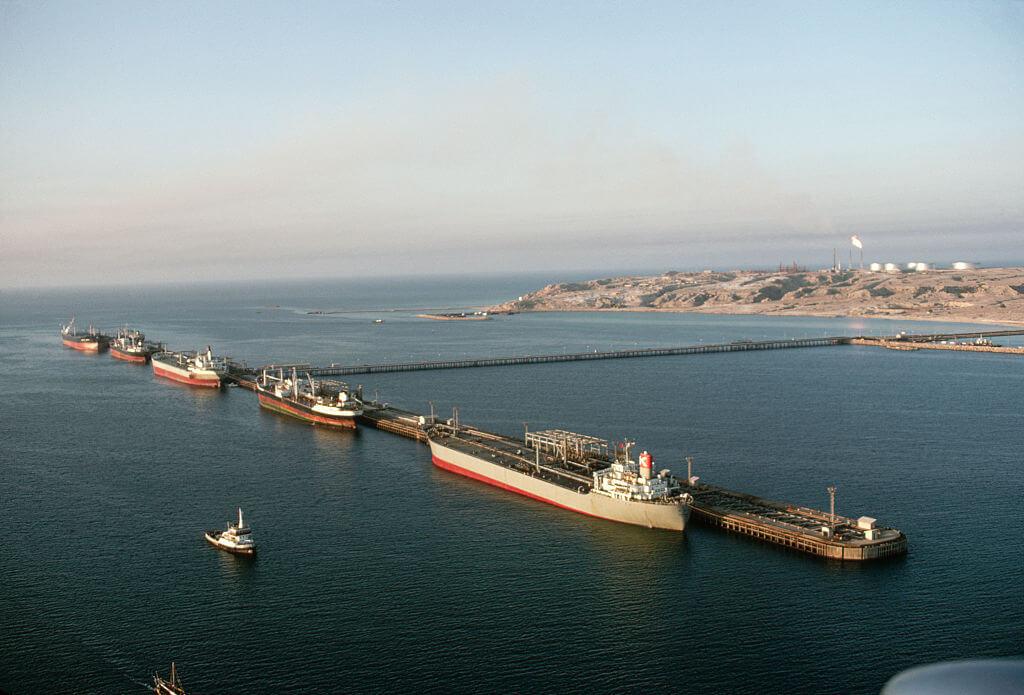
As maritime restrictions and disruptions to traditional energy shipping routes reshape Middle Eastern oil trade, Iran’s oil industry has entered one of its most challenging periods in years. Yet despite mounting pressure on tanker movements and export logistics, the country has managed to keep crude flowing to international buyers, demonstrating a degree of resilience that many analysts consider significant.
Recent tanker-tracking data indicate that Iran’s crude oil and condensate exports have declined sharply from levels recorded earlier this year. Shipments that reportedly approached 2 million barrels per day in March fell substantially by May. At first glance, the decline may appear to signal the effectiveness of efforts aimed at restricting Iranian oil sales. However, the reality is more complex.
Industry observers note that Iranian crude continues to reach customers through a combination of alternative shipping arrangements, including ship-to-ship transfers in Southeast Asian waters. Such methods make precise measurement difficult and suggest that actual export volumes may exceed figures visible through conventional tanker-tracking systems. As a result, headline export statistics may not fully reflect the amount of oil ultimately reaching end users.
The more important issue for Tehran may not be production itself, but the ability to market oil and receive payment. Iran’s oil fields and production infrastructure remain operational, and authorities have relied on both domestic storage facilities and floating storage aboard tankers to prevent output disruptions. Analysts argue that the current challenge lies primarily in transportation, sales channels and financial settlements rather than extraction capacity.
Even under reduced export conditions, oil remains a major source of foreign-currency earnings. Assuming exports average around 500,000 barrels per day and prices remain near recent elevated levels, monthly revenues could still exceed $1 billion. Although significantly lower than peak earnings achieved earlier in the year, such income provides an important financial cushion and demonstrates that oil exports have not been eliminated.
Can Rail Replace Tankers?
The tightening of maritime routes has revived discussion about overland trade corridors linking Iran and China through Central Asia. Both countries have invested in transport infrastructure associated with regional connectivity initiatives, raising questions about whether rail networks could compensate for restrictions at sea.
Most experts remain skeptical. The economics of the oil business depend heavily on scale, and rail transport struggles to compete with maritime shipping. A single oil tanker can carry several hundred thousand barrels of crude, while a very large crude carrier can transport more than 2 million barrels in one voyage. Matching such capacity would require dozens of train movements.
Infrastructure limitations present an additional challenge. Most of Iran’s oil production is concentrated in the south near the Persian Gulf, while many Chinese independent refineries purchasing Iranian crude are located along China’s eastern coastline. Even if oil reached western China by rail, substantial additional transportation would still be required before it could reach final destinations.
Cost considerations further weaken the rail option. Globally, pipelines and tankers remain the most economical methods for transporting large volumes of crude oil. Rail systems typically serve as supplementary routes during emergencies or for limited cargo volumes rather than as primary export channels.
The Real Battle
Developments in recent months suggest that the central struggle facing Iran’s oil sector is no longer production capacity but export access. The country retains the ability to produce significant volumes of crude, yet moving that oil to customers and securing payment has become increasingly complicated.
The consequences extend beyond Iran. Disruptions affecting tanker traffic through key regional waterways have contributed to tighter supplies and higher energy prices, affecting importers and consumers worldwide. This broader economic impact highlights how restrictions on oil flows can reverberate throughout global energy markets.
For now, Iran’s oil exports have not stopped; they have simply evolved. Volumes may be lower, transportation routes more complex and transaction costs higher, but crude continues to reach international buyers, particularly in Asia. The future of these exports will depend on geopolitical developments, shipping conditions and Tehran’s ability to preserve alternative sales channels. What remains clear is that Iran’s oil trade is adapting rather than disappearing.