
Watching the recent diplomatic exchanges between Tehran and Dushanbe, it’s hard to ignore a clear pattern: both capitals are no longer content with mere rhetoric when it comes to transport cooperation.
Over the past few months, we have witnessed a cascade of high-level meetings, strategic MoUs, and ambitious corridor talks that suggest Iran and Tajikistan are finally ready to translate shared Persianate affinities into hard logistical and economic dividends.
In my view, this is not just about moving freight; it is about Tehran leveraging its geographical pivot to become the undisputed transit bridge for Central Asia, and Dushanbe seizing a lifeline to open waters.
Let’s break down why these recent developments are more significant than they appear on the surface.
At the Operator Level, "Shared Capacities" Take Center Stage
The recent meeting between Jabbar Ali Zakeri, the CEO of Iran Railways, and Shayesteh Saeed Moradzadeh, Tajikistan’s Deputy Transport Minister, held at the Railways headquarters in Tehran, was a prime example of this shifting dynamic. While official readouts often sound repetitive—emphasizing "development of cooperation" and "utilization of capacities"—what struck us about this particular dialogue was the explicit focus on operationalizing existing infrastructure rather than just dreaming about new projects.
Zakeri specifically pointed to the continuation of joint consultations as the bedrock for facilitating communications and boosting bilateral trade.
This pragmatic approach is exactly what the region needs; both countries suffer from bureaucratic bottlenecks that delay cross-border movements, and it seems the railway chiefs are finally talking about the nuts and bolts of transit times, wagon availability, and customs synchronization.
Ministerial Push for Multimodal Connectivity
However, the railway talks did not happen in a vacuum. Just days prior, on July 13, Tajikistan’s Deputy Minister Moradzadeh held a broader, more comprehensive meeting with Iran’s Minister of Transport and Urban Development, Farzaneh Sadegh.
This was the strategic layer of the dialogue, where the vision expanded far beyond the rails. During that session, the two sides reviewed the latest status of bilateral deals, following up on the agreements made during the Tajik President’s recent visit to Tehran. This ministerial meeting was the real game-changer, as it moved the conversation into the multimodal space.
They discussed air transport, increasing direct flights between cities, and even the expansion of port logistics.
What is particularly telling is Iran's push to integrate Tajikistan into its southern ports network. By offering access to Iran's maritime infrastructure, Tehran is essentially telling Dushanbe: "We are your nearest and most reliable route to the Persian Gulf and beyond." This is a smart geopolitical move, as it locks in Tajik transit dependence on Iranian soil for the long haul.
From Promises to Hard Agreements—Wagon Deal
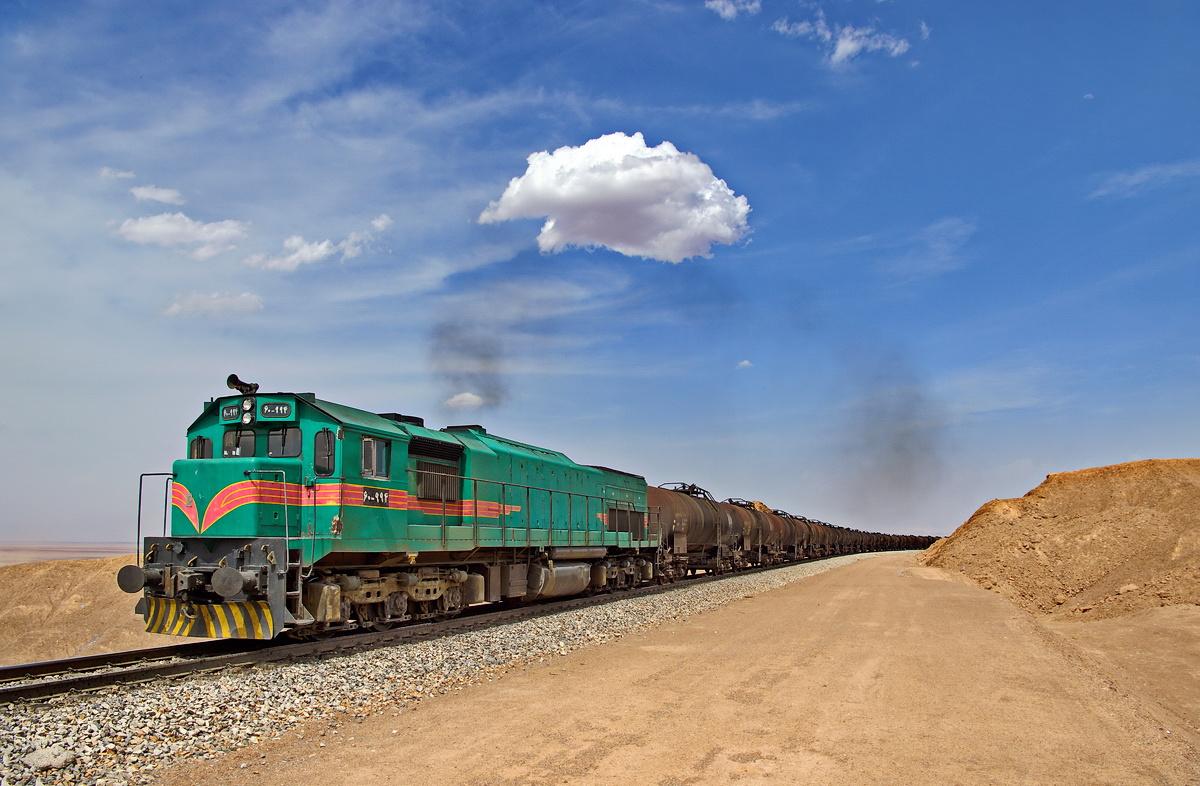
Of course, promises and high-level pleasantries mean little without contractual execution. This is why the May 2025 Memorandum of Understanding stands out as the most concrete achievement so far. Signed between Zakeri and Mirzoali Komil Jumakhon, the head of Tajikistan's State Unitary Railway Enterprise, the agreement allows Iranian freight wagons to operate on Tajikistan's national rail network and, crucially, to transit beyond Tajik borders into other regional networks.
This specific deal is a masterstroke of cost-effective diplomacy. Iran does not need to build a single extra kilometer of track to extend its logistical footprint into Central Asia; by licensing its rolling stock to move deep into the heart of the region, Tehran effectively exports its transit capacity without major capital expenditure. For Tajikistan, this is equally beneficial, as it solves the perennial shortage of rolling stock that plagues the landlocked nation.
Taken together, these interactions—the technical talks with Zakeri, the broad ministerial review with Sadegh, and the operational MoU from May—paint a picture of a bilateral relationship that is rapidly maturing from cultural kinship to economic interdependence.
Cautiously optimistic, it could be said that the real test will be the implementation of the "new rail routes" currently under examination. If Iran and Tajikistan can successfully resolve tariff disputes, synchronize customs procedures, and genuinely accelerate joint projects, they could set a powerful precedent for regional connectivity in Central Asia and the Caucasus.
For now, the rail diplomacy track is the strongest pillar of Iran-Tajik relations, and it should be watched closely to see if these recent meetings produce the tangible acceleration in freight volumes that both sides are promising.