
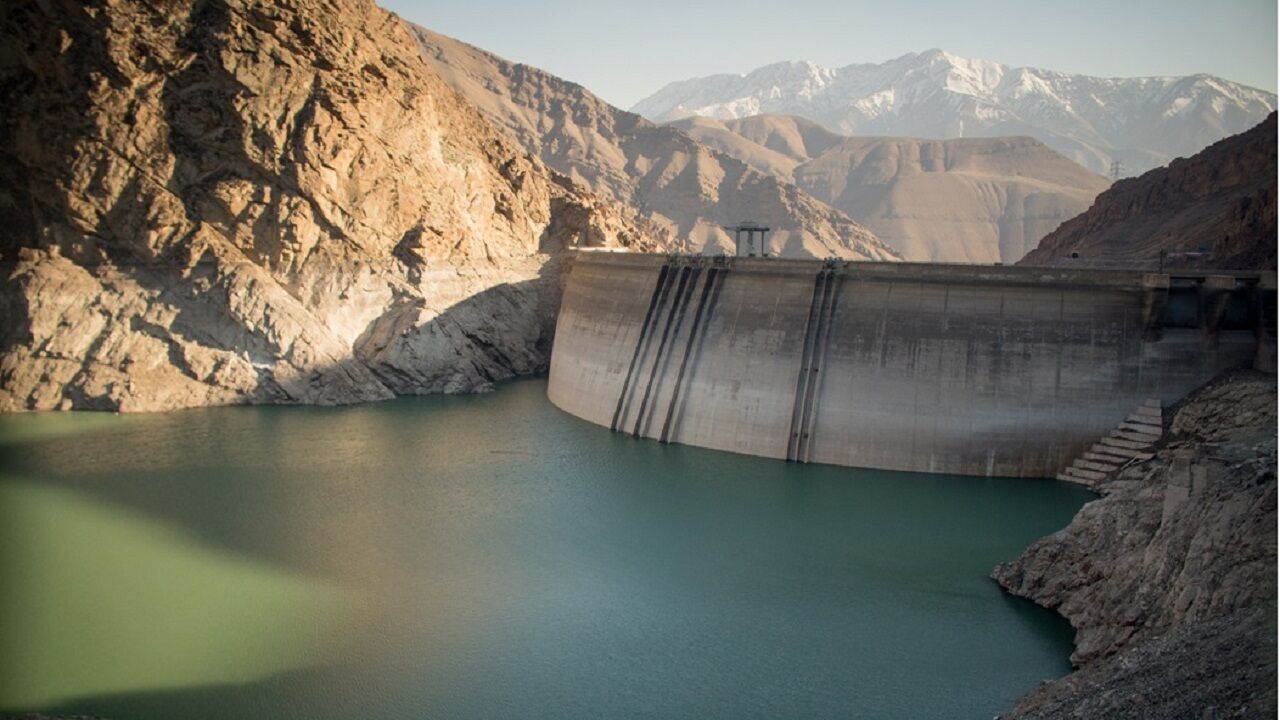
Despite recent rainfall and snowfall across much of Iran, water reserves remain critically low, with official figures showing that only 34% of the country’s dam capacity was filled by the end of Autumn (December 21).
Iran is enduring its sixth consecutive year of drought and has just experienced one of its driest autumns on record. While late season storms blanketed many cities in snow, experts warn the precipitation has not compensated for years of shortfall.
According to the latest data, inflows into reservoirs since the start of the water year (September 23) reached 4.09 billion cubic meters, down 19% from 5.04 billion cubic meters last year. Current storage stands at 17.46 billion cubic meters, a 22 percent decline compared with 22.53 billion cubic meters a year earlier. This is despite the fact that outflows also fell by 25% thanks to consumption management.
The situation is particularly dire at 14 major dams, including Tehran’s Lar, Amir Kabir, Latian and Mamloo, Isfahan’s Zayandeh Rud, and reservoirs in Khorasan, Golestan, Gilan, Zanjan, Kerman, Fars and Markazi provinces, where water levels are below 10% of capacity.
Nationwide precipitation has measured 62 millimetres so far this season, slightly above the long term average of 59.5 millimetres but unevenly distributed, with nine provinces recording significantly less rainfall.
The Ministry of Energy has introduced emergency measures such as nightly water shut offs and reduced pressure in urban networks. Officials acknowledge these steps may delay a crisis but cannot provide a lasting solution. Alongside climate change, mismanagement of resources has deepened the emergency.
A significant share of the recent rainfall manifested as flooding, which, due to inadequate water management infrastructure, ultimately discharged into the seas rather than being captured and integrated into the country’s usable water cycle.
Experts warn that with drought expected to persist, Iran must adopt modern technologies and more effective resource management to safeguard water supplies for its population of over 80 million.