
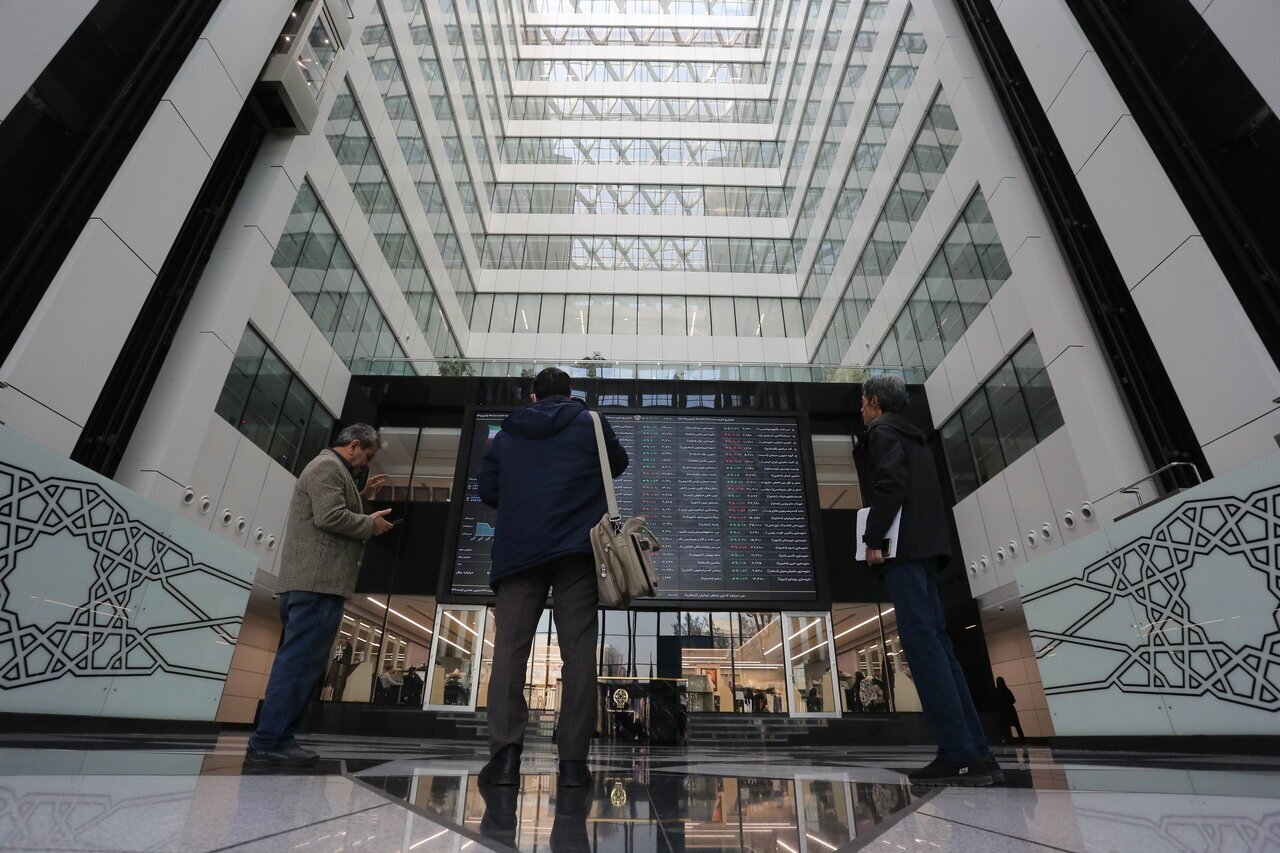
Tehran’s stock market posted a stellar autumn performance in Mehr–Azar (September–December 2025), marking one of the strongest seasonal rallies in recent years and restoring equities to the forefront of Iran’s investment landscape.
Following a volatile summer correction, the market embarked on a broad-based recovery, with the main index rising 53% over the autumn quarter, outperforming all major domestic asset classes.
This rally unfolded gradually rather than being driven by a single-month surge. From early Shahrivar (August–September 2025), when the benchmark had retreated to around 2.395 million points, equities entered a sustained upward trend as uncertainty eased and investor confidence improved. By the end of autumn, the index hovered near 3.9 million points, underlining a decisive shift in market expectations.
A defining feature of this exceptionally strong autumn was the market’s ability to overcome long-standing resistance levels. The index first reclaimed its previous historical peak of 3.252 million points, recorded in Ordibehesht (April–May 2025), a level that had constrained market advances for months.
Crucially, the benchmark consolidated above this threshold, signaling that the upswing was supported by broader fundamentals rather than short-lived speculative flows.
Pivotal Role
Macroeconomic forces played a pivotal role in shaping the autumn rally. Intensifying inflation expectations alongside renewed upward pressure on the free-market exchange rate improved the nominal earnings outlook for listed companies. In an economy where corporate profitability is closely tied to currency movements and pricing flexibility, equities once again emerged as an effective hedge against inflationary pressures.
Policy-related adjustments further strengthened the market’s outlook. Greater flexibility in foreign-exchange supply by export-oriented firms, combined with a gradual shift away from heavily suppressed rates, enhanced earnings visibility.
At the same time, easier procedures for product price increases and wider reliance on competitive price discovery—particularly via the Iran Mercantile Exchange—supported margins across key industrial sectors, including metals and steel.
The stellar autumn performance also coincided with a return of retail investors to the stock market. After years of underperformance relative to inflation, gold and foreign exchange, equities entered this period with notable valuation gaps. As systemic risks receded and expectations stabilized, this latent potential translated into higher trading values and broader participation.
Despite the strong seasonal rally, equities continue to trail gold in year-to-date returns from Farvardin (March 2025) to Azar (December 2025). Nonetheless, the autumn surge significantly narrowed this gap and reaffirmed the Tehran Stock Exchange’s position as a key investment avenue in Iran’s inflation-prone economy.
Going forward, the durability of this momentum will hinge on macroeconomic stability, policy consistency and effective management of systemic risks.