
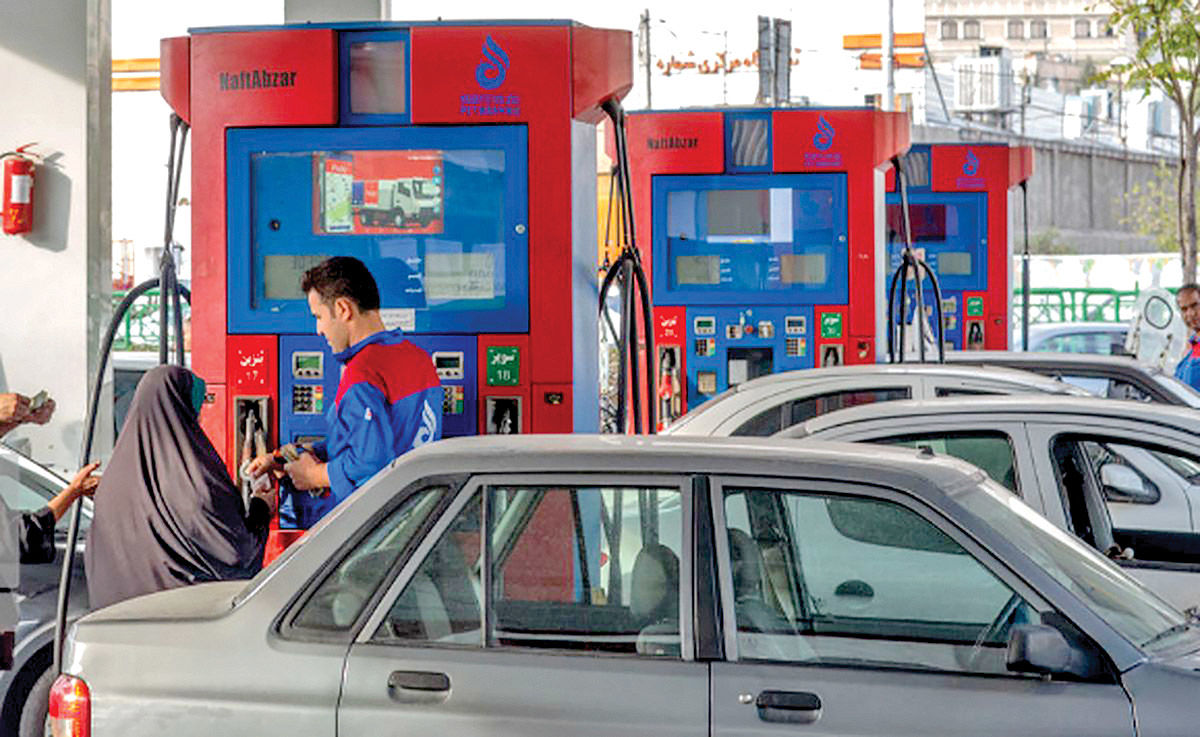
Iran’s latest gasoline reform is beginning to reshape how motorists refuel, with early data pointing to a sharp rise in the use of personal fuel cards and a notable drop in daily consumption.
Officials say the changes, driven by a new pricing structure, are improving transparency in the fuel market and strengthening the government’s ability to monitor consumption.
Speaking at a cabinet meeting chaired by President Masoud Pezeshkian, Oil Minister Mohsen Paknejad said on Monday Iran’s daily gasoline consumption averaged about 129 million liters in the month of Azar (November 22 to December 21). Of that total, 43% was supplied through station-owned “open” fuel cards, while 57% was purchased using motorists’ personal fuel cards.
Following the rollout of the new gasoline scheme, the share of station cards has fallen by 17 percentage points, while the use of personal cards has increased significantly. As a result, daily gasoline consumption has declined by roughly 9 million liters, dropping to around 120 million liters.
Official data from the National Iranian Oil Refining and Distribution Company (NIORDC) confirm that the shift occurred rapidly. Within just seven days of implementation, the share of fuel dispensed through personal cards rose from 57% to 74%. Policymakers view this as a core objective of the reform, arguing that it goes beyond a simple change in payment methods and has broader implications for energy governance.
The shift followed the government’s decision to introduce a three-tier gasoline pricing system and raise the price of fuel purchased with station cards to 50,000 rials (3.8 cents) per liter. This price signal effectively altered consumer incentives.
For years, many drivers relied on station cards because there was little or no price difference compared with the second-tier quota on personal cards. As a result, station cards accounted for as much as 43% of daily fueling, creating what officials described as a major blind spot in consumption monitoring.
NIORDC’s head Mohammad-Sadegh Azimifar has said the heavy reliance on station cards deprived policymakers of reliable data, making it difficult to analyze consumption patterns, identify abnormal use, or design targeted policies. Budget laws in recent years had called for reducing the role of station cards, but without a meaningful price gap, those efforts failed.
The new scheme has changed that equation. Use of station cards has dropped by about 40%, channeling fuel distribution back into traceable systems. Still, officials are cautious about attributing the entire consumption decline to the policy alone. Azimifar noted that cold weather, snowfall, and unusually high fueling ahead of the rollout may also have played a role.